Course overview
Rationale
The knowledge, understanding and skills taught through Health and Physical Education enable students to explore and enhance their own and others' health and physical activity in diverse and changing contexts. Development of the physical, intellectual, social, emotional and spiritual capacities necessary in the strands of 'Movement and physical activity' and 'Personal, social and community health' are key components of the P–10 Australian Curriculum: Health and Physical Education. They provide the foundations for learning and alignment to the QCAA Physical Education and Health senior syllabuses, to build increasingly complex and developmental courses of study in the senior years.
The Health syllabus provides students with a contextualised strengths-based inquiry of the various determinants that create and promote lifelong health, learning and active citizenship. Drawing from the health, behavioural, social and physical sciences, the Health syllabus offers students an action, advocacy and evaluation-oriented curriculum. Embedded in Health is the Health inquiry model that provides the conceptual framework for this syllabus.
The Health syllabus is developmental and becomes increasingly more complex across the four units through the use of the Health inquiry model. This syllabus is underpinned by a salutogenic (strengths-based) approach, which focuses on how health resources are accessed and enhanced. Resilience as a personal health resource in Unit 1, establishes key teaching and learning concepts, which build capacity for the depth of understanding over the course of study. Unit 2 focuses on the role and influence of peers and family as resources through one topic selected from two choices: Elective topic 1: Alcohol, or Elective topic 2: Body image. Unit 3 explores the role of the community in shaping resources through one topic selected from three choices: Elective topic 1: Homelessness, Elective topic 2: Transport safety, or Elective topic 3: Anxiety. The culminating unit challenges students to investigate and evaluate innovations that influence respectful relationships to help them navigate the post-schooling life course transition.
Health uses an inquiry approach informed by the critical analysis of health information to investigate sustainable health change at personal, peer, family and community levels. Students define and understand broad health topics, which they reframe into specific contextualised health issues for further investigation. Students plan, implement, evaluate and reflect on action strategies that mediate, enable and advocate change through health promotion.
Studying Health will highlight the value and dynamic nature of the discipline, alongside the purposeful processes and empathetic approach needed to enact change. The investigative skills required to understand complex issues and problems will enable interdisciplinary learning, and prepare students for further study and a diverse range of career pathways. The development of problem-solving and decision-making skills will serve to enable learning now and in the future.
The health industry is currently experiencing strong growth and is recognised as the largest industry for new employment in Australia, with continued expansion predicted due to ageing population trends. A demand for individualised health care services increases the need for health-educated people who can solve problems and contribute to improved health outcomes across the lifespan at individual, family, local, national and global levels. The preventive health agenda is future-focused to develop 21st century skills, empowering students to be critical and creative thinkers, with strong communication and collaboration skills equipped with a range of personal, social and ICT skills.
Syllabus objectives
The syllabus objectives outline what students have the opportunity to learn.
1. Recognise and describe information about health-related topics and issues.
When students recognise information, they identify characteristics or features about health-related topics and issues. Students describe information by giving a detailed account of those characteristics or features.
2. Comprehend and use the Health inquiry model.
When students comprehend the Health inquiry model, they clarify their understanding of the characteristics or features in relation to health-related topics and issues in a range of contexts. When students use the Health inquiry model, they apply their knowledge and understanding for specific purposes.
3. Analyse and interpret information to draw conclusions about health-related topics and issues.
When students analyse information, they examine primary sources and secondary sources to draw conclusions about the relationships between the individual and their personal, social and community resources along with barriers and enablers that decrease or increase access to those resources. When students interpret information, they draw conclusions about data trends and/or data statements from contextual information.
4. Critique information to distinguish determinants that influence health status.
Students critique information by using the Health inquiry model to review information about a broad health-related topic in a detailed and analytical way. Students distinguish determinants for a specific issue by recognising the different factors that influence health.
5. Investigate and synthesise information to develop action strategies.
Students investigate by conducting a formal inquiry to establish or obtain facts about data trends, barriers, enablers and existing resources. Students synthesise investigated information by combining different parts or elements into a whole to create a new understanding of a specific issue. When students develop action strategies to influence health issues, they make decisions about the methodology and resources required to address the needs, barriers and enablers for a target group from a range of alternatives.
6. Evaluate and reflect on implemented action strategies to justify recommendations that mediate, advocate and enable health promotion.
When students evaluate implemented action, they make judgments about the methodology and resources in relation to selected criteria. When students reflect on action strategies, they appraise impact/uptake and propose recommendations that mediate, advocate and enable health promotion. When students justify recommendations, they provide evidence to support a decision or strategy.
7. Organise information for particular purposes.
Students organise information by selecting and sequencing research to respond to health-related topics and issues in a range of contexts. Students organise interdependent or coordinated parts of information by arranging them into a whole for particular purposes.
8. Make decisions about and use mode-appropriate features, language and conventions for particular purposes and contexts.
When students make decisions about mode-appropriate features and conventions, they use written and complementary features to express meaning for particular purposes in a range of contexts. Students make language choices by selecting appropriate vocabulary. Students use referencing conventions to practise ethical scholarship for particular purposes.
Designing a course of study in Health
Syllabuses are designed for teachers to make professional decisions to tailor curriculum and assessment design and delivery to suit their school context and the goals, aspirations and abilities of their students within the parameters of Queensland's senior phase of learning.
The syllabus is used by teachers to develop curriculum for their school context. The term course of study describes the unique curriculum and assessment that students engage with in each school context. A course of study is the product of a series of decisions made by a school to select, organise and contextualise subject matter, integrate complementary and important learning, and create assessment tasks in accordance with syllabus specifications.
It is encouraged that, where possible, a course of study is designed such that teaching, learning and assessment activities are integrated and enlivened in an authentic setting.
Course structure
Health is a General senior syllabus. It contains four QCAA-developed units from which schools develop their course of study.
Each unit has been developed with a notional time of 55 hours of teaching and learning, including assessment.
Students should complete Unit 1 and Unit 2 before beginning Units 3 and 4. Units 3 and 4 are studied as a pair.
More information about the requirements for administering senior syllabuses is available in the 'Queensland curriculum' section of the QCE and QCIA policy and procedures handbook.
Curriculum
Senior syllabuses set out only what is essential while being flexible so teachers can make curriculum decisions to suit their students, school context, resources and expertise.
Within the requirements set out in this syllabus and the QCE and QCIA policy and procedures handbook, schools have autonomy to decide:
- how and when subject matter is delivered
- how, when and why learning experiences are developed, and the context in which learning occurs
- how opportunities are provided in the course of study for explicit and integrated teaching and learning of complementary skills.
These decisions allow teachers to develop a course of study that is rich, engaging and relevant for their students.
Assessment
Senior syllabuses set out only what is essential while being flexible so teachers can make assessment decisions to suit their students, school context, resources and expertise.
General senior syllabuses contain assessment specifications and conditions for the assessment instruments that must be implemented with Units 3 and 4. These specifications and conditions ensure comparability, equity and validity in assessment.
Within the requirements set out in this syllabus and the QCE and QCIA policy and procedures handbook, schools have autonomy to decide:
- specific assessment task details
- assessment contexts to suit available resources
- how the assessment task will be integrated with teaching and learning activities
- how authentic the task will be.
In Unit 1 and Unit 2, schools:
- develop at least two but no more than four assessments
- complete at least one assessment for each unit
- ensure that each unit objective is assessed at least once.
In Units 3 and 4, schools develop three assessments using the assessment specifications and conditions provided in the syllabus.
More information about assessment in senior syllabuses is available in 'The assessment system' section of the QCE and QCIA policy and procedures handbook.
Subject matter
Each unit contains a unit description, unit objectives and subject matter. Subject matter is the body of information, mental procedures and psychomotor procedures (see Marzano & Kendall 2007, 2008) that are necessary for students' learning and engagement with the subject.
Subject matter itself is not the specification of learning experiences but provides the basis for the design of student learning experiences.
Subject matter has a direct relationship with the unit objectives and provides statements of learning that have been constructed in a similar way to objectives.
Aboriginal perspectives and Torres Strait Islander perspectives
The QCAA is committed to reconciliation. As part of its commitment, the QCAA affirms that:
- Aboriginal peoples and Torres Strait Islander peoples are the first Australians, and have the oldest living cultures in human history
- Aboriginal peoples and Torres Strait Islander peoples have strong cultural traditions and speak diverse languages and dialects, other than Standard Australian English
- teaching and learning in Queensland schools should provide opportunities for students to deepen their knowledge of Australia by engaging with the perspectives of Aboriginal peoples and Torres Strait Islander peoples
- positive outcomes for Aboriginal students and Torres Strait Islander students are supported by successfully embedding Aboriginal perspectives and Torres Strait Islander perspectives across planning, teaching and assessing student achievement.
Guidelines about Aboriginal perspectives and Torres Strait Islander perspectives and resources for teaching are available at www.qcaa.qld.edu.au/k-12-policies/aboriginal-torres-strait-islander-perspectives.
Where appropriate, Aboriginal perspectives and Torres Strait Islander perspectives have been embedded in the subject matter.
Complementary skills
Opportunities for the development of complementary skills have been embedded throughout subject matter. These skills, which overlap and interact with syllabus subject matter, are derived from current education, industry and community expectations and encompass the knowledge, skills, capabilities, behaviours and dispositions that will help students live and work successfully in the 21st century.
These complementary skills are:
- literacy — the knowledge, skills, behaviours and dispositions about language and texts essential for understanding and conveying English language content
- numeracy — the knowledge, skills, behaviours and dispositions that students need to use mathematics in a wide range of situations, to recognise and understand the role of mathematics in the world, and to develop the dispositions and capacities to use mathematical knowledge and skills purposefully
- 21st century skills — the attributes and skills students need to prepare them for higher education, work, and engagement in a complex and rapidly changing world. These skills include critical thinking, creative thinking, communication, collaboration and teamwork, personal and social skills, and digital literacy. The explanations of associated skills are available at www.qcaa.qld.edu.au/senior/senior-subjects/general-subjects/21st-century-skills.
It is expected that aspects of literacy, numeracy and 21st century skills will be developed by engaging in the learning outlined in this syllabus. Teachers may choose to create additional explicit and intentional opportunities for the development of these skills as they design the course of study.
Additional subject-specific information
Additional subject-specific information has been included to support and inform the development of a course of study.
The Health inquiry model
Using the Health inquiry model for particular purposes is central to the Health General syllabus. The Health inquiry model procedural knowledge must be integrated into the subject matter and assessment of all units. Teaching and learning in Health is underpinned by three stages of inquiry: define and understand, plan and act, and evaluate and reflect. These inquiry stages are used, procedurally, as a pedagogy and a conceptual framework and interact with the overarching approach, Charter and resources and facilitate the investigation of health issues in a specific context using the 'river of life'.
- The overarching salutogenic approach includes the educative purpose and strengths-based approach.
- Ottawa Charter for Health Promotion strategies are the overarching charter strategies that
- mediate between the different interests in society in the pursuit of health
- advocate for health to create the essential conditions for health
- enable all people to achieve their full health potential.
- Health literacy as an overarching resource — functional, interactive and critical levels of health literacy (Nutbeam 2006).
- Social justice as an overarching resource — the ideology of social justice in Health provides a critical eye for the examination of the consistency, fairness and appropriateness of health outcomes for individuals, groups and communities; the social justice framework has three interrelated principles
- diversity — recognition and tolerance of difference
- equity — access to and quality of resources
- supportive environments — environmental factors influencing health improvement.
- River of life metaphor: 'health should be attended to as a dynamic ever-present relation between the swimmer and the river' (McCuaig & Quennerstedt, 2018 cited in Maivorsdotter and Andersson 2020) where 'we are all, always, in the dangerous river of life. The twin question is: How dangerous is our river? How well can we swim?' (Antonovsky 1996, p.14). The metaphor is represented in the Health inquiry model between the 'dis-ease' and 'ease' poles of the continuum
- barriers and enablers: influence an individual's access to and use of personal, social and community resources
- personal, social and community resources — the key factors that make a movement towards the ease pole of the health continuum possible; these resources can be found within people, but also in their immediate and distant environment as both material and non-material qualities (Lindström & Eriksson 2005)
- stressors — demand made by the internal or external environment of an organism that upsets its homeostasis (Antonovsky 1985); stressors can be categorised with respect to locus (internal or external), duration, temporality (acute, time limited, chronic and intermittent), forecasting (predictable or unpredictable), tone (positive or negative) and impact (normative or catastrophic) (Hill Rice 2012).
Each stage of inquiry uses unit-specific approaches that are developmental across the four units (see the Unit-specific approaches table). Further information is available in the QCAA Portal subject-specific resources (Additional resources tab — Health inquiry model resources).
Unit-specific approaches
| Unit | Stage 1: Define and understand | Stage 2: Plan and act | Stage 3: Evaluate and reflect |
|---|---|---|---|
| Unit 1: Resilience as a personal health resource | PERMA+ | Ottawa Charter — personal skills | RE-AIM |
| Unit 2: Peers and family as resources for healthy living | Social cognitive theory | Ottawa Charter | RE-AIM |
| Unit 3: Community as a resource for healthy living | Social ecological model | Diffusion of innovations model | RE-AIM |
| Unit 4: Respectful relationships in the post-schooling transition | Life course perspective | Diffusion of innovations model | RE-AIM |
Reporting
General information about determining and reporting results for senior syllabuses is provided in the 'Determining and reporting results' section of the QCE and QCIA policy and procedures handbook.
Reporting standards
Reporting standards are summary statements that describe typical performance at each of the five levels (A–E).
A
The student demonstrates accurate recognition and discerning description of a range of relevant information about health-related topics and issues, and succinct comprehension and perceptive use of the Health inquiry model, in a range of contexts.
The student demonstrates insightful analysis, interpretation and critique of a range of valid information about health-related topics and issues to distinguish determinants that influence health.
The student shows an insightful synthesis of investigated information to develop sophisticated action strategies to influence health issues. They justify recommendations that mediate, advocate and enable health promotion through critical evaluation and insightful reflection on implemented action strategies.
The student organises information coherently and effectively to achieve a particular purpose and decision-making about, and accurate use of mode-appropriate features, language and conventions for particular purposes is discerning.
B
The student demonstrates recognition and purposeful description of a range of information about health-related topics and issues, and considered comprehension and effective use of the Health inquiry model, in a range of contexts.
The student demonstrates purposeful analysis, interpretation and critique of a range of information about health-related topics and issues to distinguish determinants that influence health.
The student shows a considered synthesis of investigated information to develop feasible action strategies to influence health issues. They justify recommendations that mediate, advocate and enable health promotion through considered evaluation and purposeful reflection on implemented action strategies.
The student organises information effectively to achieve a particular purpose and decision-making about, and use of mode-appropriate features, language and conventions for particular purposes is purposeful.
C
The student demonstrates recognition and appropriate description of information about health-related topics and issues, and appropriate comprehension and use of the Health inquiry model, in a range of contexts.
The student demonstrates appropriate analysis, interpretation and critique of information about health-related topics and issues to distinguish determinants that influence health.
The student investigates and synthesises information to develop action strategies to influence health issues. They justify recommendations that mediate, advocate and enable health promotion through feasible evaluation and reflection on implemented action strategies.
The student organises information appropriately to achieve a purpose and decision-making about, and use of some mode-appropriate features, language and conventions for particular purposes is appropriate.
D
The student demonstrates variable recognition and superficial description of some information about health-related topics and issues, and superficial comprehension and use of aspects of the Health inquiry model, in a range of contexts.
The student demonstrates superficial analysis, interpretation and explanation of aspects of information about health-related topics and issues to distinguish some determinants.
The student investigates information to develop superficial and/or partial strategies and make recommendations that relate to health promotion.
The student organises aspects of information and decision-making and use of mode-appropriate features, language and conventions is variable.
E
The student demonstrates elements of recognition, description and comprehension of health information.
The student provides elements of explanation and organisation of aspects of information and some determinants that influence health.
The student provides elements of description of action strategies that influence health, and makes variable and/or inappropriate use of features, language and conventions.
Determining and reporting results
Unit 1 and Unit 2
Schools make judgments on individual assessment instruments using a method determined by the school. They may use the reporting standards or develop an instrument-specific marking guide (ISMG). Marks are not required for determining a unit result for reporting to the QCAA.
The unit assessment program comprises the assessment instrument/s designed by the school to allow the students to demonstrate the unit objectives. The unit judgment of A–E is made using reporting standards.
Schools report student results for Unit 1 and Unit 2 to the QCAA as satisfactory (S) or unsatisfactory (U). Where appropriate, schools may also report a not rated (NR).
Units 3 and 4
Schools mark each of the three internal assessment instruments implemented in Units 3 and 4 using ISMGs.
Schools report a provisional mark by criterion to the QCAA for each internal assessment.
Once confirmed by the QCAA, these results will be combined with the result of the external assessment developed and marked by the QCAA.
The QCAA uses these results to determine each student's subject result as a mark out of 100 and as an A–E.
Units
Unit 1: Resilience as a personal health resource
In Unit 1, students are introduced to and explore the broad notion of health, focusing on resilience as a personal health resource. In this introductory unit of Health, students will learn how to apply a socio-critical lens to develop a critical perspective of health and to gain an understanding of how health is socially constructed. The ability of people and authorities to influence the perception of health and illness for individuals is considered from pathogenically and salutogenically oriented lenses. Students develop their understanding of the salutogenic approach used to understand and critique health topics and issues through the Unit 1 Health inquiry model. Students learn how to reframe a broad health-related topic as a narrow, specific and contextualised issue through an inquiry approach. Students use the PERMA+ framework, personal skills action area of the Ottawa Charter and RE-AIM to analyse, implement and evaluate action strategies that build resilience as a resource for personal health.
Unit objectives
- Recognise and describe information about resilience in a personal health context.
- Comprehend and use the Health inquiry model in relation to resilience in a personal health context.
- Analyse and interpret information to draw conclusions about resilience in a personal health context.
- Critique information about resilience to distinguish determinants that influence health in a personal health context.
- Investigate and synthesise information to develop an action strategy to influence resilience in a personal health context.
- Evaluate and reflect on implemented action strategies related to resilience in a personal health context to justify recommendations that mediate, advocate and enable health promotion.
- Organise information about resilience for a particular purpose.
- Make decisions about and use mode-appropriate features, language and conventions for particular purposes and contexts.
Subject matter
Stage 1: Define and understand resilience as a personal health resource
How does resilience relate to health?
- Recognise and describe personal health status.
- Recognise and describe how health status is evaluated and measured by self and others, including the AIHW and Mission Australia.
- Recognise and describe the significance of mental health and wellbeing for young people's health status.
- Recognise and describe how the definitions, philosophies and representations of health have changed over the past century and inform the study of health
- pathogenic and salutogenic perspectives
- dimensions of health
- static and dynamic health
- cultural perspectives
- Recognise and describe the Health inquiry model for Unit 1, including
- overarching salutogenic approach
- the Ottawa Charter overarching strategies
- health literacy as an overarching resource
- social justice as an overarching resource
- river of life metaphor
- barriers and enablers
- personal, social and community resources
- stressors.
- Recognise and describe how health determinants influence behaviour
- physical determinants, e.g. genetic factors, biological factors and biomedical factors
- psycho-sociocultural determinants, e.g. cognitive function, stress, health behaviours, culture, media, education, employment, income, family, neighbourhood, peers, social inclusion, self-esteem, social cohesion, government policies and resources
- economic/environmental determinants, e.g. resources, health systems, wealth, landscape, climate, chemical factors and human-made factors.
- Recognise and describe the physiological responses to stressful stimuli and positive stimuli and locus of control such as
- production of adrenaline and cortisol, including the fight–flight reaction to stress
- actions of dopamine, oxytocin, and serotonin and noradrenalin as positive brain neurotransmitters
- emotions
- feelings
- neuroplasticity — how the brain is adaptable and dynamic.
- Define and describe resilience and critique its significance as a general resistance resource for health status by considering the objective elements of wellbeing, including optimism, physical activity, nutrition and sleep.
- Apply research skills and processes to critique how resilience is influenced by intrinsically related physical, mental, emotional, social and spiritual dimensions of health.
- Apply research skills and processes to critique how resilience is influenced by external developmental assets and internal developmental assets (Search Institute 2016)
- external assets related to support, empowerment, boundaries and expectations, and constructive use of time
- internal assets related to commitment to learning, positive values, social competencies and positive identity.
- Critique the importance of resilience and personal agency as resources across the life course and the influence on
- education, work, family life and health trajectories
- key transitions across the life course
- challenges presented by critical moments, life events and turning points.
- Critique the influence of eustress and stress on their own and others' resilience from salutogenically and pathogenically oriented perspectives
- pathogenically oriented perspective emphasises risk and harm reduction
- salutogenically oriented perspective emphasises assets according to positive psychology to build resilience.
How do we understand resilience according to the PERMA+ model?
- Investigate the role of positive psychology, the PERMA and PERMA+ frameworks in enhancing wellbeing and resiliency
- positive psychology is the scientific study of wellbeing and flourishing
- PERMA (+) — (P)ositive emotions centre around feeling good; (E)ngagement is being completely absorbed in activities; (R)elationships is about being authentically connected to others; (M)eaning refers to having a purposeful existence; and (A)ccomplishment is based on having a sense of achievement and success; (+) are the objective elements of wellbeing, including optimism, physical activity, nutrition and sleep.
- Recognise and describe the range of sources for health-related research
- primary sources include information in its most original and authentic form taken from surveys, observations, interviews, questionnaires and experiments, personal records such as letters or diary entries
- secondary sources include published data from books, magazines, newspapers, journals and periodicals; electronic data such as documentaries; government records such as surveys, records, census data and other statistical reports; and the internet.
- Identify the features of credible health research — validity, reliability and currency.
- Recognise and describe the role ethics, confidentiality and mandatory reporting play in collecting and producing research.
- Interpret health research to draw conclusions about data trends and findings in relation to resilience and personal stressors for young people undertaking the transition into senior schooling.
- Analyse and interpret information to make decisions about the significance of mental wellbeing and the role of resilience as a personal health general resistance resource for young people undertaking the transition into senior schooling in the school context.
- Investigate primary data collection methods to identify and analyse the relationship between resilience and the significance of stressors for young people undertaking the transition into senior schooling in their school context, such as
- questioning-based collections such as online self-assessments of character strengths, developmental assets, resilience and stress
- observation-based collections such as apps that capture primary data, including optimism, sleep, physical activity, nutrition and mental health.
Stage 2: Plan for action in a personal health context
How can resilience be reframed as a personal health action strategy?
- Investigate the PERMA and PERMA+ frameworks for their capacity to develop their own personal skills
- (P)ositive emotions — optimism, pleasure, enjoyment, gratitude, hope and humour
- (E)ngagement — activities that enable growth and flow in intellectual, skill and emotional capabilities
- (R)elationships — building positive relationships
- (M)eaning — the need to feel that what we do has value and is worthwhile
- (A)ccomplishment — identifying strengths, setting tasks, having goals and savouring achievements
- (+) — the objective elements of wellbeing, including:
- optimism — optimistic people have higher levels of physical and psychological wellbeing and are more resilient to stressful life events
- physical activity — regular exercise releases adrenalin and controls cortisol levels, which enhances wellbeing and physical health
- nutrition — increased fruit and vegetable consumption is consistently linked with improved mental health and lowered risk of obesity, Type 2 diabetes, heart disease and some cancers
- sleep — people with good sleep habits report better quality of life and lower levels of depression, mood swings, loss of concentration and irritability.
- Complete a personal needs assessment by synthesising information about mental wellbeing and resilience as a personal health resource.
- Synthesise information to make decisions about the two elements of PERMA+ that have the greatest capacity to enhance wellbeing and resilience through the development of personal skills.
- Justify decisions with primary data and secondary data about the indicators of personal wellbeing and resilience for the two elements of the PERMA+ framework.
- Select one element of the PERMA+ framework to develop a personal health action strategy that develops personal skills through the use of issue statements or questions that include
- issue statements can include data and/or quotes from secondary sources
- issue questions that specify the PERMA+ element, the target group (themselves) and the social justice principle.
- Identify the methodology and resources required to develop a personal health action strategy for one PERMA+ element that addresses needs, barriers and enablers.
- Implement the personal health action strategy for a specified period.
What are the health approaches, strategies and systems that apply to the specific issue?
- Recognise and describe the characteristics of health approaches, strategies and systems.
- Comprehend and explain the health systems that operate at the local, national and global levels, including the United Nations, WHO, AIHW, federal and state government departments of health and local councils.
- Recognise and describe the role of schools in enhancing resilience and addressing stressors among young people.
- Recognise and describe the influence of partner local and national, government and non-government organisations on schools' roles in enhancing resilience and addressing stressors among young people.
- Comprehend and explain the five action areas of the Ottawa Charter — build healthy public policy; create supportive environments for health; strengthen community action for health; develop personal skills; and reorient health services.
- Analyse, interpret and critique a health promotion case study to identify how the Ottawa Charter strategies and action areas are mobilised.
How can action strategies be used to advocate, mediate and enable change by reframing resilience into a narrow personal health issue in their school context?
- Comprehend and use the PERMA+ framework and Ottawa Charter to identify approaches that build resilience within their school setting.
- Critique school resources and evaluate their relevance for the needs of their cohort drawing on social justice principles, health literacy skills of the target audience, and pre-test primary data and secondary data.
- Synthesise findings and use the PERMA+ framework and the Ottawa Charter to make decisions about how the broad topic of resilience is reframed as a specific contextualised personal health issue in their school context through the use of issue statements or questions.
- Plan and justify an action strategy based on one of the Ottawa Charter strategies for health promotion
- action strategies could include organisation of time, stress management, optimising energy levels, growth mindset, positive psychology, positive education and health literacy.
Stage 3: Evaluate and reflect on action in a personal health context
What evidence can be used to judge the impact of action in relation to resilience?
- Investigate the evidence that can be used to judge the impact of action in relation to resilience.
- Recognise and describe RE-AIM as a scientific method of systematically considering the strengths and weaknesses of action through the steps of reach, effectiveness, adoption, implementation and maintenance.
- Reflect on the impact of the chosen action and make decisions to recommend improvements that advocate, mediate and enable further change to enhance resilience as a personal health resource.
- Justify decisions about the effectiveness of the chosen action in strengthening, maintaining or adapting resilience as a personal health resource.
- Make decisions about and use mode-appropriate strategies to communicate with stakeholders by disseminating action, findings and recommendations.
Unit 2: Peers and family as resources for healthy living
In Unit 2, students develop their skills to plan, implement and evaluate an action strategy to advocate, mediate and enable change in relation to alcohol and other drug use or body image in a peer and family health context. An inquiry approach is used to define and understand alcohol or body image as the broad health-related topic and reframe the chosen topic into a narrow-contextualised health issue.
Students investigate and analyse the risk factors and protective factors, individual and socioecological resources that are needed for healthy living through a peer and family health context. Primary data and secondary data trends are interpreted to draw conclusions and inform the development of an action strategy to strengthen, maintain or adapt peer/family resources. The action strategy is implemented and evaluated with recommendations and reflection used to inform future investigations. Approaches and frameworks within the Unit 2 Health inquiry model guide the action strategy development and evaluation.
Unit objectives
- Recognise and describe information about the chosen topic in a peer and family health context.
- Comprehend and use the Health inquiry model in relation to the chosen topic in a peer and family health context.
- Analyse and interpret information to draw conclusions about the chosen topic in a peer and family health context.
- Critique information about the chosen topic to distinguish determinants that influence health in a peer and family health context.
- Investigate and synthesise information to develop an action strategy to influence an issue relating to the chosen topic in a peer or family health context.
- Evaluate and reflect on an implemented action strategy in a peer or family health context to justify recommendations that mediate, advocate and enable health promotion for an issue relating to the chosen topic.
- Organise information about the chosen topic for particular purposes.
- Make decisions about and use mode-appropriate features, language and conventions for particular purposes and contexts.
Subject matter
Elective topic 1: Alcohol and other drugs
Stage 1: Define and understand alcohol and other drugs in a peer and family health context
How do alcohol and other drugs relate to health?
- Recognise and describe the interrelationship between personal, peer and family health from a salutogenic perspective
- how an individual is a resource for safe alcohol and other drug use — responsible alcohol use, abstinence, moderation
- how peers are a resource for safe alcohol and other drug use — respectful relationships
- how family is a resource for safe alcohol and other drug use — positive role modelling
- how relationships between existing community and social resources strengthen, maintain or adapt the personal resources related to alcohol and other drugs
- how barriers and enablers increase or decrease access to resources related to alcohol and other drugs.
- Recognise and describe how health determinants influence behaviour
- physical determinants, e.g. human brain development; suppression of neural pathway; genetics, addiction
- psychological determinants, e.g. self-concept, self-regulation, coping skills, resilience, self-efficacy; personality, image, self-esteem, peer pressure and desire to 'fit in'; perceived parental/carer and social support, monitoring and communication; stress and trauma
- broad features of society, e.g. culture, affluence, social cohesion, social inclusion, social alienation media, social media, and other forms of digital media; environmental factors; geographical location
- social determinants, e.g. family income and structure, positive norms and values, role modelling, supportive relationships, limits, rules, clear expectations, peer mentors and role models, education levels, employment, culture, communication skills, media, engagement with school and community; rebelliousness, anti-social behaviour, alcohol- and drug-related violence
- economic determinants, e.g. tobacco and e-cigarette/vape manufacturers, capitalism, marketing, consumerism, policy tensions and alcohol taxes; the influence of unmeasured and unregulated alcohol advertising such as point-of-sale, branded merchandise, sponsorships and films and the teenager's manufactured desire for newness; alcohol industry funding; lock-out laws
- health behaviours, e.g. tobacco, e-cigarette/vape and inhalant use, alcohol consumption, use of illicit drugs, physical activity, dietary behaviours and sexual practices
- safety factors, e.g. risk-taking and decision-making
- knowledge, attitudes and beliefs, e.g. health literacy.
- Recognise and describe how health literacy and social justice impact people's use of alcohol and other drugs.
- Recognise and describe how alcohol and other drug use impacts health.
- Critique how alcohol and other drug use is expressed or changes across the life course (from being a child with parent role models, to an adult who has progressed through their career transition into retirement)
- a 'rite of passage' for young people in their post-schooling transition
- negative risk-taking and thrill-seeking and the subsequent influence on education, work, family and health trajectories across the life course.
How do we understand alcohol and other drug use according to social cognitive theory?
- Comprehend and explain social cognitive theory as the dynamic interaction between individual, environment and behavioural influences.
- Comprehend and explain the role of peers and family as environmental influences such as role modelling, peer pressure, parental expectations and beliefs.
- Analyse, interpret and organise health research from secondary sources to provide evidence of environmental influences
- consider national, state and local/regional data trends over time including sources, e.g. the AIHW, the National Household Drug Survey, the Centre for Accident Research and Road Safety (CARRS-Q), the Australian Bureau of Statistics (ABS), Generation Vape and other credible sources.
- Analyse and interpret health research about peer and family as environmental influences of alcohol and other drug use to compare and contrast local and national contexts, local community priorities, variances in demographics, beliefs and drinking patterns of young people.
- Analyse and interpret information to make decisions about the significance of alcohol and other drug use in a peer and family context.
- Investigate primary data collection pre-test methods to make decisions about the significance of alcohol and other drug use in a local peer and family context
- questioning-based collections such as surveys, polls, interviews, social media engagement.
Stage 2: Plan for and implement action in a peer or family health context
How can social cognitive theory be used to reframe alcohol and other drug use as a specific issue in a peer or family context?
- Comprehend and use social cognitive theory to investigate environment based protective approaches that can be used to influence alcohol and other drug use
- observational learning — of new behaviours role modelled by peers, others and through the media
- facilitation — providing tools, resources or environmental changes that make new behaviours easier to perform
- incentive motivation — the use of rewards and punishments to modify behaviours
- collective efficacy — beliefs about the ability of a group to perform action that leads to the desired outcome, e.g. parent groups to organise safe parties and health professionals advocating for other environmental changes to reduce underage alcohol and e-cigarettes/vape use.
- Critique information to evaluate the extent to which these approaches are strengthened, maintained or limited by community barriers and enablers, e.g. social justice, health literacy, moral disengagement, key stakeholder engagement (schools, councils, health professionals, local business and not-for-profit organisations), existing resources (Australian Drug Foundation, Queensland Health, Queensland Police, Queensland Fire and Emergency Services, Queensland Department of Education and Training), research centres at tertiary institutions and community groups.
- Critique information to select the most significant social justice principle for alcohol and other drug use in a specific peer or family context informed by primary data.
- Synthesise information to make decisions about how the broad health-related topic of alcohol and other drug is reframed as a specific contextualised health issue related to safe alcohol or other drug use in a peer or family context through the use of issue statements and questions that include
- issue statements with data and/or quotes from secondary sources
- issue questions that specify the specific approach, target group (peers or family) and social justice principle.
What are the health approaches, strategies and systems that apply to the specific issue related to safe alcohol or other drug use in a peer or family context?
- Comprehend and use social cognitive theory and Ottawa Charter to identify and categorise information about the chosen approach that addresses the contextualised health issue related to safe alcohol or other drug use.
- Recognise and describe RE-AIM as a tool for evaluating health promotion.
- Comprehend and use RE-AIM to make decisions about the approach, strategy, action area and data collection methods.
How can action strategies be used to advocate, mediate and enable change in relation to a specific issue related to safe alcohol or other drug use in a peer or family health context?
- Complete a needs assessment by synthesising information about alcohol or other drugs in a peer or family health context.
- Synthesise pre-test primary data and secondary data to plan and justify an action strategy to strengthen, maintain or adapt peers or family as a resource.
- Evaluate the capacity of the proposed action to enhance peers or family as a resource using the reach, effectiveness and implementation steps of RE-AIM.
- Critique information to make decisions about refinements needed for the proposed action strategy and develop the resources needed to implement action.
- Implement action strategy.
Stage 3: Evaluate and reflect on action in a peer or family health context
What evidence can be used to judge the impact of action in relation to the specific issue related to safe alcohol or other drug use in a peer or family context?
- Synthesise information to develop and implement primary data collection to evaluate implemented action using the reach, effectiveness and implementation steps of RE-AIM.
- Analyse and interpret the collected primary data to make decisions about the significance of key findings in relation to the action strategy.
- Compare primary data with secondary data and research to evaluate the impact of the chosen action in strengthening, maintaining or adapting peers or family as a resource.
- Reflect on the impact of the chosen action and justify recommendations that mediate, advocate and enable further health promotion to strengthen, maintain or adapt peers or family as a resource.
- Make decisions about and use mode-appropriate strategies to communicate with stakeholders by disseminating action, findings and recommendations.
Elective topic 2: Body image
Stage 1: Define and understand body image in a peer and family health context
How does body image relate to health?
- Recognise and describe the interrelationship between personal, peer and family health from a salutogenic perspective, by considering
- how an individual is a body image resource — self-acceptance, media literacy, healthy living and nutrition, positive and respectful relationships, cyber safety, online identity
- how peers are body image resources — positive role modelling, respecting diversity
- how family is a body image resource — positive role modelling, supportive environment
- how relationships between existing community and social resources strengthen, maintain or adapt the personal resources related to body image
- how barriers and enablers increase or decrease access to resources related to body image.
- Recognise and describe how health determinants influence behaviour
- physical determinants, e.g. human brain development, genetics, family history of body image issues and/or health-related problems such as obesity; approaches to dieting, healthy eating, exercise, eating disorders; brain function/visual cortex
- psychological determinants, e.g. personality, image, self-esteem, peer pressure, self-concept, social self-concept (peers and significant others), emotional self-concept (emotional states), physical self-concept (physical ability and appearance) and resilience
- social determinants, e.g. socialisation, family, culture, role models, media, social media, and other forms of digital media, virtual world/gaming (avatars), health and fashion trends
- economic determinants, e.g. capitalism, marketing and advertising of fashion and food, consumerism, policy tensions, government health priorities (overweight and obesity), funding for foundations/organisations, import and food taxes, age regulations for cosmetic surgery and tattooing, voluntary code of conduct; community infrastructure.
- Recognise and describe how health literacy and social justice impact body image.
- Recognise and describe how body image impacts health.
- Critique how body image is expressed or changes across the life course
- socialisation across the life course, e.g. globalisation of media and the westernised body image ideals, body positivity vs body shaming, health vs weight
- changes to family structures and environment across the life course, e.g. family composition and gender stereotyping
- types of relationships across the life course, e.g. evolution of online dating, gaming and use of social media platforms for communication and forming relationships
- biophysical influences on body image across the life course, e.g. changes related to the key transitions of puberty and menopause.
How do we understand body image according to social cognitive theory?
- Comprehend and explain social cognitive theory as the dynamic interaction between individual, environment and behavioural influences.
- Comprehend and explain the role of peers and family as environmental influences such as role modelling, peer pressure, parental expectations and beliefs.
- Analyse, interpret and organise health research from secondary sources to provide evidence of environmental influences
- national data trends over time, e.g. Mission Youth Australia surveys, eating and physical activity behaviours, body image, eating disorder and obesity trends from the AIHW, ABS and other credible sources.
- Analyse and interpret health research about peer and family as influences on body image to compare and contrast local and national contexts, local community priorities, variances in demographics, food and physical activity beliefs and behaviours.
- Analyse and interpret information to make decisions about the significance of body image in a peer and family context.
- Investigate primary data collection pre-test methods to make decisions about the significance of body image in a local peer or family context
- questioning-based collections from sources, including surveys, polls, interviews, social media engagement
- questioning or observation-based collections from cosmetic surgery centres, tattoo parlours, gyms, local community parks, personal trainers
- innovations (online tools) — self-esteem (the Rosenberg self-esteem scale), body somatotype evaluations, body image self-assessments.
Stage 2: Plan for and implement action in a peer or family health context
How can social cognitive theory be used to reframe body image as a specific issue in a peer or family context?
- Comprehend and use social cognitive theory to investigate environment-based protective approaches that can be used to influence body image
- observational learning — new behaviours role modelled by peers, others and through the media
- facilitation — providing tools, resources or environmental changes that make new behaviours easier to perform
- incentive motivation — the use of rewards and punishments to modify behaviours
- collective efficacy — beliefs about the ability of a group to perform action that leads to the desired outcome (e.g. peer groups work together to promote the acceptance of group norms).
- Critique information to evaluate the extent to which these approaches are strengthened, maintained or limited by community barriers and enablers, e.g. social justice, health literacy, moral disengagement, key stakeholder engagement (schools, councils, local businesses and not-for-profit organisations), existing resources (the National Eating Disorders Collaboration, the Butterfly Foundation and organisations such as Headspace and ReachOut).
- Critique information to select the most appropriate social justice principle for body image in a specific peer or family context informed by primary data.
- Synthesise information to make decisions about how the broad, health-related topic of body image is reframed as a specific contextualised health issue in a peer or family context through the use of issue statements and questions that include
- issue statements with data and/or quotes from secondary sources
- issue questions that specify the specific risk factor or protective factor, the target group (peers or family) and the social justice principle.
What are the health approaches, strategies and systems that apply to the specific body image issue in a peer or family context?
- Comprehend and use social cognitive theory and the Ottawa Charter to identify and categorise information about the chosen approach that addresses the contextualised health issue related to body image.
- Recognise and describe RE-AIM as a tool for evaluating action.
- Comprehend and use RE-AIM to make decisions about the approach, strategy, action area and data collection methods.
How can action strategies be used to advocate, mediate and enable change in relation to a specific body image issue?
- Complete a needs assessment by synthesising information about body image in a peer or family health context.
- Synthesise pre-test primary data and secondary data to plan and justify an action strategy to strengthen, maintain or adapt peers or family as a resource.
- Evaluate the capacity of the proposed action to enhance peers or family as a resource using the reach, effectiveness and implementation steps of RE-AIM.
- Critique information to make decisions about refinements needed for the proposed action strategy and develop the resources needed to implement action.
- Implement action strategy.
Stage 3: Evaluate and reflect on action in a peer or family health context
What evidence can be used to judge the impact of action in relation to the specific body image issue in a peer or family context?
- Synthesise information to develop and implement primary data collection to evaluate implemented action using the reach, effectiveness and implementation steps of RE-AIM.
- Analyse and interpret the collected primary data and make decisions about the significance of key findings in relation to the action strategy.
- Compare primary data with secondary data and research to evaluate the impact of the chosen action in strengthening, maintaining or adapting peers or family as a resource.
- Reflect on the impact of the chosen action and justify recommendations that advocate, mediate and enable further health promotion to strengthen, maintain or adapt peers or family as a resource.
- Make decisions about and use mode-appropriate strategies to communicate with stakeholders by disseminating action, findings and recommendations.
Unit 3: Community as a resource for healthy living
In Unit 3, students develop their skills to plan, implement, evaluate and reflect on an action strategy to advocate, mediate and/or enable change in relation to homelessness, transport safety or anxiety in a community health context. An inquiry approach is used to define and explore the broad health-related topic before students reframe the chosen topic into a narrow-contextualised health issue.
Students investigate and analyse the risk factors and protective factors, individual and socio-ecological resources that are needed for a target group in their local or regional community. Primary data and secondary data trends are interpreted to draw conclusions and inform the development of an action strategy to strengthen, maintain or adapt community resources. The action strategy is implemented and evaluated with recommendations and reflection used to inform future investigations. Approaches and frameworks within the Unit 3 Health inquiry model guide the action strategy development and evaluation.
Unit objectives
- Recognise and describe information about the chosen topic in a community health context.
- Comprehend and use the Health inquiry model in relation to the chosen topic in a community health context.
- Analyse and interpret information to draw conclusions about the chosen topic in a community health context.
- Critique information about the chosen topic to distinguish determinants that influence health in a community health context.
- Investigate and synthesise information to develop an action strategy to influence an issue relating to the chosen topic in a community health context.
- Evaluate and reflect on an implemented action strategy in a community health context to justify recommendations that mediate, advocate and enable health promotion for an issue related to the chosen topic.
- Organise information about the chosen topic for a particular purpose.
- Make decisions about and use mode-appropriate features, language and conventions for particular purposes and contexts.
Subject matter
Elective topic 1: Homelessness
Stage 1: Define and understand homelessness in a community health context
How does homelessness relate to health?
- Recognise and describe the different types of homelessness (primary, secondary, tertiary).
- Recognise and describe the interrelationship between personal, peer, family and community health from a salutogenic perspective
- how an individual is a resource for homeless people
- how peers and family are a resource for homeless people
- how communities are a resource for homeless people
- how relationships between existing community and social resources strengthen, maintain or adapt the personal resources of people experiencing homelessness
- how barriers and enablers increase or decrease access to resources related to homelessness.
- Recognise and describe how health determinants influence behaviour
- physical determinants, e.g. genetics, human brain development, chronic health conditions and disability
- psychological determinants, e.g. personality, psychological disorders, image, self-esteem, resilience and peer pressure, gambling and drug and alcohol dependence, mental health
- social determinants, e.g. socialisation, role models, media, family, culture, refugee and migrant backgrounds, connection to Country/Place, physical and cultural displacement for Aboriginal peoples and Torres Strait Islander peoples, remote communities, domestic and family violence, public places and overcrowding
- economic determinants, e.g. capitalism, marketing, consumerism, policy tensions, welfare, entrenched disadvantage, intergenerational poverty, local, state, national and international economic influences such as inflation and the rising cost of living, housing supply and affordability, government funding, programs, not-for-profit organisations and partnerships, and unemployment rates.
- Recognise and describe how health literacy and social justice impact homelessness.
- Recognise and describe how homelessness impacts health.
- Critique how homelessness as a community health concern is expressed or changes across the life course
- from being a dependent child to being an independent young person and to being an older person
- through intergenerational homelessness.
How do we understand homelessness according to the social ecological model?
- Comprehend and explain the social ecological model as the dynamic interaction between individual, relationship, community and societal levels of factors that influence homelessness.
- Comprehend and explain the influence of community in relation to homelessness
- development of media policy and guidelines
- government priorities, e.g. recognition of mental health; the role of Country/Place, culture and identity for Aboriginal peoples and Torres Strait Islander peoples; domestic and family violence and relationship breakdowns; drug and alcohol addiction; employment; and housing and affordability
- perceptions of truancy, intergenerational poverty, overcrowding, drug addiction, domestic and family violence as risk factors for homelessness
- uptake of education, training, engagement and counselling as protective factors that provide opportunities to develop self-efficacy
- awareness of stereotypes and the associated stigma related to homelessness, e.g. Vinnies CEO Sleepouts and Homelessness Games
- awareness of opportunities that aim to increase access to safe and affordable housing (Commonwealth of Australia 2023).
- Analyse, interpret and organise health research from secondary sources and draw conclusions about trends in relation to homelessness in a community context
- national, Queensland or local/regional data trends over time data.
- Analyse and interpret health research about community influences of homelessness to compare and contrast local and national contexts, including community priorities, variances in demographics, perceptions and beliefs.
- Analyse and interpret information to make decisions about the significance of homelessness in a local or regional community context.
- Investigate primary data collection pre-test methods to make decisions about the significance of homelessness in a local or regional community context
- question-based collections from sources (such as surveys, polls, interviews and social media engagement) to determine community perceptions of homelessness, causes, risk factors and vulnerable groups
- observation-based collections from community homelessness resources.
Stage 2: Plan for and implement action in a community health context
How can the social ecological model be used to reframe the health-related topic as a specific community homelessness issue?
- Comprehend and use the social ecological model (as adapted by the Center for Disease Control) to investigate the multiple levels of factors that can be used to influence homelessness
- individual — knowledge, skills, attitudes, beliefs, physical and psychological health, individual socio-economic status and demographics
- relationship — peers, family, intimate relationships, professionals and people
- community — settings, physical environment, information environment, neighbourhood, services, resources and technology
- societal — policy, legislation/law, culture, religion, affluence, services, resources and technology.
- Critique information to evaluate the extent to which these levels of factors that influence homelessness are strengthened, maintained or limited by community barriers and enablers, e.g. social justice, health literacy, key stakeholder engagement (schools, councils, local business and not-for-profit organisations), existing resources (Homelessness Australia, Reconnect, DV Connect, Micah Projects) research centres at tertiary institutions, and community groups, e.g. Northern Beaches, Geelong and Ryde Projects, Young People Beat, Brotherhood of St Lawrence and Springboard.
- Critique information to select the most significant social justice principle for homelessness in a specific community context informed by primary data.
- Synthesise information to make decisions about how the broad health-related topic of homelessness is reframed as a specific contextualised health issue in a community context through the use of issue statements and questions that include
- issue statements with data and/or quotes from secondary sources
- issue questions that specify the specific approach, target group (community) and social justice principle.
What are the health approaches, strategies and systems that apply to the specific issue related to homelessness in a community context?
- Comprehend the diffusion of innovations model, and its concepts, stages and variables to plan an action strategy that can address homelessness across multiple levels of influence.
- Comprehend and use the social ecological model and diffusion of innovations model to identify and categorise current innovations that address the contextualised health issue related to homelessness at the community level.
- Comprehend and use diffusion concepts
- innovation — an idea, practice, process, service or product which is perceived as new by an individual, group or organisation
- diffusion — the extent, pattern and rate at which innovations spread through a population, encompassing innovation development to widespread adoption and sustained implementation
- opinion leaders — these are influential individuals who impact the behaviour of peers through either their authority, status or credibility
- champions/advocates — individuals who facilitate change, they must have good relationships within their networks and support the innovation.
- Comprehend and use the stages of diffusion
- innovation development — intervention design along with the systematic and coordinated plan for innovation implementation into a setting with a target participant group
- dissemination — deliberate, planned, systematic efforts to accelerate the widespread adoption and implementation of innovations which is impacted by
- communication — messages that convey information to improve knowledge about an innovation
- persuasion — communication to induce feelings and/or stimulate action
- resources — infrastructure and resources required to disseminate an innovation which also impact the innovation's ability to become institutionalised
- regulations — policy, legislation and laws that impact exposure to an innovation, acceleration of dissemination and institutionalisation
- institutionalisation — the innovation is used as part of routine organisational practice where organisational maintenance is evident.
- Comprehend and use the diffusion process variables and general factors that influence the success and speed innovations are adopted (innovation uptake)
- characteristics of innovations — relative advantage, compatibility, complexity, trialability and observability
- features of the setting — geographical, political, economic, societal-cultural
- characteristics of people — decision makers, change agents, advocates, users (innovators, early adopters, early-majority adopters, late-majority adopters and laggards)
- rate of adoption.
- Recognise and describe RE-AIM as a tool for evaluating action.
- Synthesise information to make decisions about appropriate data collection methods using RE-AIM.
How can action strategies be used to advocate, mediate and enable change in relation to the homelessness issue?
- Complete a needs assessment by synthesising information about homelessness in a community health context.
- Synthesise pre-test primary data and secondary data using diffusion process variables to inform the development of an action strategy for a specific homelessness related issue in their community context.
- Evaluate the capacity of the proposed action to enhance their community as a resource for homelessness using the diffusion process variables and RE-AIM.
- Critique the health literacy skills of the target audience to predict the impact on the diffusion strategy.
- Synthesise information to make decisions about refinements needed for the proposed action strategy and develop the resources needed to implement action.
- Implement diffusion action strategy.
Stage 3: Evaluate and reflect on action in a community health context
What evidence can be used to judge the impact of this action in relation to the homelessness issue?
- Synthesise information to develop and implement primary data collection to evaluate implemented action informed by the diffusion process variables and RE-AIM.
- Analyse and interpret the collected primary data and make decisions about the significance of key findings in relation to the action strategy.
- Compare primary data with secondary data and research to evaluate and reflect on the impact of the diffusion action strategy and justify recommendations that mediate, advocate and enable maintenance and/or institutionalisation.
- Make decisions about and use mode-appropriate strategies to communicate with stakeholders by disseminating action, findings and recommendations.
Elective topic 2: Transport safety
Stage 1: Define and understand transport safety in a community health context
How does transport safety relate to health?
- Recognise and describe the different types of transport e.g. pedestrians, cyclists, small wheel activities (e.g. skate board, long board, roller skates/blades, foot scooters), motorcyclists, cars, heavy vehicles, rail, buses, boats, ferries, personal watercraft, personal mobility devices (e.g. e-scooters, e-skateboards).
- Recognise and describe the interrelationship between personal, peer, family and community health from a salutogenic perspective
- how an individual is a resource for transport safety — driver/rider, passenger or transport user
- how peers and family are a resource for transport safety — influence on risk-taking and decision-making
- how communities are a resource for transport safety — advocacy groups, driver/rider training, transport infrastructure and policy
- how relationships between existing community and social resources strengthen, maintain or adapt the personal resources of transport users
- how barriers and enablers increase or decrease access to resources related to transport safety.
- Recognise and describe how health determinants influence behaviour
- physical determinants — human brain development and gender
- psychological determinants, e.g. personality, psychological disorders, image, self-esteem, peer pressure, hazard recognition and perception, optimism bias and third-person effect
- social determinants, e.g. socialisation, role models, media, family and culture, negative risk-taking and thrill-seeking; and transport behaviours of international visitors
- economic determinants, e.g. marketing, consumerism, policy tensions and built environment; cost of cars with 5-star safety systems; advertising strategies; funding projects for local, state and national transport networks, active transport policies.
- Recognise and describe how health literacy and social justice impact homelessness.
- Recognise and describe how transport safety impacts health.
- Critique how transport safety as a community health concern is expressed or changes across the life course (patterns of transport modes and use across the life course)
- negative risk-taking or thrill-seeking
- different types of transport use
- altered perception of risk associated with distraction and inattention; drink and drug driving/riding; fatigue; safety device use; and speeding (Fatal Five road behaviours), environmental factors (built and weather related) and transport safety features.
How do we understand transport safety according to the social ecological model?
- Comprehend and explain the social ecological model as the dynamic interaction between individual, relationship, community and societal levels of factors that influence transport safety.
- Comprehend and explain the role of the community in relation to transport safety
- social norms and adherence to transport rules
- role modelling and risk-taking on transport networks
- advocacy groups, transport safety education and driver/rider training schools.
- Analyse, interpret and organise health research from secondary sources, and draw conclusions about trends in relation to transport safety in a community context
- national, Queensland or local/regional trend over time data.
- Analyse and interpret health research about community influences of transport safety to compare and contrast local and national contexts
- local community priorities, variances in demographics, infrastructure and transport use patterns
- the subjective perception of transport safety.
- Analyse and interpret information to make decisions about the significance of transport safety in a local or regional community context.
- Investigate primary data collection pre-test methods to make decisions about the significance of transport safety in a local or regional community context
- question-based collections from sources (such as surveys, polls, interviews and social media engagement) to determine community perceptions, causes, risk factors and protective factors, vulnerable groups and self-reported transport behaviours
- observation-based collections from sources such as speed devices and apps that promote safe driving; and behaviour observations such as traffic light compliance, pedestrian crossings, mobile phones, helmet use among cyclists and scooter riders, cyclists stopping at red lights, use of headphones for pedestrians and cyclists, use of child restraints, and transport behaviours in school drop-off zones.
Stage 2: Plan for and implement action in a community health context
How can the social ecological model be used to reframe the health-related topic as a specific community transport safety issue?
- Comprehend and use the social ecological model to investigate the multiple levels of factors that can be used to influence transport safety
- individual — knowledge, skills, attitudes, beliefs, physical and psychological health, individual socio-economic status and demographics
- relationship — peers, family, intimate relationships, professionals and people
- community — settings, physical environment, information environment, neighbourhood, services, resources and technology
- societal — policy, legislation/law, culture, religion, affluence, services, resources and technology.
- Critique information to evaluate the extent to which these levels of factors that influence transport safety are strengthened, maintained or limited by community barriers and enablers, e.g. social justice, health literacy, key stakeholder engagement (schools, councils, transport safety advocacy groups, police/fire/ambulance/emergency services, research centres at tertiary institutions and community groups) and existing resources (Queensland Department of Transport and Main Roads, Royal Automobile Club of Queensland and CARRS-Q).
- Critique information to select the most significant social justice principle for transport safety in a specific local or regional context informed by primary data.
- Synthesise information to make decisions about how the broad health-related topic of transport safety is reframed as a specific contextualised health issue in a community context through the use of issue statements and questions that include
- issue statements with data and/or quotes from secondary sources
- issue questions that specify the specific risk or protective factor, the target group of transport users and a social justice principle.
What are the health approaches, strategies and systems that apply to the community transport safety issue?
- Comprehend the diffusion of innovations model, and its concepts, stages and variables to plan an action strategy that can address transport safety across multiple levels of influence.
- Comprehend and use the social ecological model and diffusion of innovations model to identify and categorise current innovations that addresses the contextualised health issue related to transport safety at the community level.
- Comprehend and use diffusion concepts
- innovation — an idea, practice, process, service or product which is perceived as new by an individual, group or organisation
- diffusion — the extent, pattern and rate at which innovations spread through a population, encompassing innovation development to widespread adoption and sustained implementation
- opinion leaders — these are influential individuals who impact the behaviour of peers through either their authority, status or credibility
- champions/advocates — individuals who facilitate change, they must have good relationships within their networks and support the innovation.
- Comprehend and use the stages of diffusion
- innovation development — intervention design along with the systematic and coordinated plan for innovation implementation into a setting with a target participant group
- dissemination — deliberate, planned, systematic efforts to accelerate the widespread adoption and implementation of innovations which is impacted by
- communication — messages that convey information to improve knowledge about an innovation
- persuasion — communication to induce feelings and/or stimulate action
- resources — infrastructure and resources required to disseminate an innovation which also impact the innovation's ability to become institutionalised
- regulations — policy, legislation and laws that impact exposure to an innovation, acceleration of dissemination and institutionalisation
- institutionalisation — the innovation is used as part of routine organisational practice where organisational maintenance is evident.
- Comprehend and use the diffusion process variables and general factors that influence the success and speed innovations are adopted (innovation uptake)
- characteristics of innovations — relative advantage, compatibility, complexity, trialability and observability
- features of the setting — geographical, political, economic, societal-cultural
- characteristics of people — decision-makers, change agents, advocates, users (early adopters, early-majority adopters, late-majority adopters and laggards)
- rate of adoption.
- Recognise and describe RE-AIM as a tool for evaluating action.
- Synthesise information to make decisions about appropriate data collection methods using RE-AIM.
How can action strategies be used to advocate, mediate and enable change in relation to the transport safety issue?
- Complete a needs assessment by synthesising information about transport safety in a community health context.
- Synthesise pre-test primary data and secondary data using diffusion process variables to inform the development of an action strategy for a specific transport safety related issue in their community context.
- Evaluate the capacity of the proposed action to enhance their community as a resource for transport safety using RE-AIM and diffusion process variables.
- Critique the health literacy skills of the target audience to predict the impact on the diffusion strategy.
- Synthesise information to make decisions about refinements needed for the proposed action strategy and develop the resources needed to implement action.
- Implement diffusion action strategy.
Stage 3: Evaluate and reflect on action in a community health context
What evidence can be used to judge the impact of this action in relation to the transport safety issue?
- Synthesise information to develop and implement primary data collection to evaluate implemented action informed by the diffusion process variables and RE-AIM.
- Analyse and interpret the collected primary data and make decisions about the significance of key findings in relation to the action strategy.
- Compare primary data with secondary data and research to evaluate and reflect on the impact of the diffusion action strategy and justify recommendations that advocate, mediate and enable maintenance and/or institutionalisation.
- Justify decisions using data from primary sources and secondary sources.
- Make decisions about and use mode-appropriate strategies to communicate with stakeholders by disseminating action, findings and recommendations.
Elective topic 3: Anxiety
Stage 1: Define and understand anxiety in a community health context
How does anxiety relate to health?
- Recognise and describe the different types of anxiety disorders, e.g. generalised anxiety disorder, performance-related anxiety, specific phobias, obsessive compulsive disorder, climate-related anxiety, pandemic-related anxiety, post-traumatic stress disorder, and panic disorder.
- Recognise and describe interrelationship between personal, peer, family and community health from a salutogenic perspective
- how an individual is a resource for people with anxiety, e.g. health literacy, help-seeking strategies, emotional awareness and self-regulation, impulse control, positive psychology, growth mindset, empathy, positive lifestyle choices and coping strategies to provide support in tough situations
- how peers, family and communities are a resource for people with anxiety, e.g. mental health knowledge, acceptance, advocacy, assistance with help-seeking, positive relationships, connectedness and role modelling resilience
- how relationships between existing community and social resources strengthen, maintain or adapt the personal resources of people with anxiety
- how barriers and enablers increase or decrease access to resources related to anxiety.
- Recognise and describe how the community influences health behaviours
- physical determinants, e.g. inherited genetic predisposition, human brain development and gender
- psychological determinants, e.g. thought processes, personality, psychological disorders, image, self-esteem and resilience
- social determinants, e.g. socialisation, role models, media, family and culture; young people (including secondary school graduates and university entrants), Aboriginal peoples and Torres Strait Islander peoples, women and men, pregnancy and early parenthood, returned servicemen and women, LGBTIQ+ community, people from remote areas and multicultural and/or different religious backgrounds
- economic determinants, e.g. capitalism, marketing, consumerism, policy tensions and welfare.
- Recognise and describe how health literacy and social justice impact homelessness.
- Recognise and describe how anxiety impacts health.
- Critique how anxiety as a community health concern is expressed or changes across the course of a person's life
- perception of anxiety – barriers and enablers
- impact of stimuli/stressors on educative, work, family and health trajectories
- impact of life transitions and life events such as leaving school and becoming new parents.
How do we understand anxiety according to the social ecological model?
- Comprehend and explain the social ecological model as the dynamic interaction between individual, relationship, community and societal levels of factors that influence anxiety.
- Comprehend and explain the role of community in relation to anxiety
- recognition, validation and acceptance of mental health and anxiety as a community concern
- provision of community face-to-face and technology-based resources (online, apps and helplines)
- initiatives to support the reporting, portrayal and communication of suicide and mental illness within the community such as Mindframe.
- Analyse, interpret and organise health research from secondary sources and draw conclusions about trends in relation to anxiety in a community context
- national, Queensland or local/regional trends over time data.
- Analyse and interpret health research about community influences of anxiety to compare and contrast local and national contexts, including community priorities, variances in demographics, perceptions and beliefs.
- Analyse and interpret information to make decisions about the significance of anxiety in a local or regional community context.
- Investigate primary data collection methods to make decisions about the significance of anxiety in a local community context
- question-based collections from sources (such as survey, polls, interviews and social media engagement) to assess knowledge, awareness of resources and causes of anxiety
- catastrophe scales
- Mindspot Anxiety Quiz
- beyondblue anxiety and depression checklist (K10 test)
- Kessler 10 Psychological Distress Scale (K10)
- Generalised Anxiety Stigma Scale (GASS).
Stage 2: Plan for and implement action in a community health context
How can the social ecological model be used to reframe the health-related topic as a specific community anxiety issue?
- Comprehend and use the social ecological model (as adapted by the Center for Disease Control) to investigate the multiple levels of factors that can be used to influence anxiety
- individual — knowledge, skills, attitudes, beliefs, physical and psychological health, individual socio-economic status and demographics
- relationship — peers, family, intimate relationships, professionals and people
- community — settings, physical environment, information environment, neighbourhood, services, resources and technology
- societal — policy, legislation/law, culture, religion, affluence, services, resources and technology.
- Critique information to evaluate the extent to which these levels of factors that influence anxiety are strengthened, maintained or limited by community barriers and enablers — social justice, health literacy, key stakeholder engagement (schools, councils, local business and not-for-profit organisations), and existing resources (AIHW Mental Health Services Australia, mindhealthconnect, National E–Mental Health Strategy, Queensland Government Mental health and wellbeing, Mental Health Australia, beyondblue, ReachOut, Headspace and Australian Indigenous HealthInfoNet).
- Critique information to select the most significant social justice principle for anxiety in a specific community context informed by primary data.
- Synthesise information to make decisions about how the broad health-related topic of anxiety is reframed as a specific contextualised health issue in a community context through the use of issue statements and questions that include
- issue statements with data and/or quotes from secondary sources
- issue questions that specify the specific approach, target group (community) and social justice principle.
What are the health approaches, strategies and systems that apply to the specific issue related to anxiety in a community context?
- Comprehend the diffusion of innovations model, and its concepts, stages and variables to plan an action strategy that can address anxiety across multiple levels of influence.
- Comprehend and use the social ecological model and diffusion of innovations model to identify and categorise current innovations that address the contextualised health issue related to anxiety at the community level.
- Comprehend and use diffusion concepts
- innovation — an idea, practice, process, service or product which is perceived as new by an individual, group or organisation
- diffusion — the extent, pattern and rate at which innovations spread through a population, encompassing innovation development to widespread adoption and sustained implementation
- opinion leaders — these are influential individuals who impact the behaviour of peers through either their authority, status or credibility
- champions/advocates — individuals who facilitate change, they must have good relationships within their networks and support the innovation.
- Comprehend and use the stages of diffusion
- innovation development — intervention design along with the systematic and coordinated plan for innovation implementation into a setting with a target participant group
- dissemination — deliberate, planned, systematic efforts to accelerate the widespread adoption and implementation of innovations which is impacted by
- communication — messages that convey information to improve knowledge about an innovation
- persuasion — communication to induce feelings and/or stimulate action
- resources — infrastructure and resources required to disseminate an innovation which also impact the innovation's ability to become institutionalised
- regulations — policy, legislation and laws that impact exposure to an innovation, acceleration of dissemination and institutionalisation
- institutionalisation — the innovation is used as part of routine organisational practice where organisational maintenance is evident.
- Comprehend and use the diffusion process variables and general factors that influence the success and speed innovations are adopted (innovation uptake)
- characteristics of innovations — relative advantage, compatibility, complexity, trialability and observability
- features of the setting — geographical, political, economic, societal-cultural
- characteristics of people — decision-makers, change agents, advocates, users (innovators, early adopters, early-majority adopters, late-majority adopters and laggards)
- rate of adoption.
- Recognise and describe RE-AIM as a tool for evaluating action.
- Synthesise information to make decisions about appropriate data collection methods using RE-AIM.
How can action strategies be used to advocate, mediate and enable change in relation to the anxiety issue?
- Complete a needs assessment by synthesising information about anxiety in a community health context.
- Synthesise pre-test primary data and secondary data according to diffusion process variables to inform the development of an action strategy for a specific anxiety related issue in their community context.
- Evaluate the capacity of the proposed action to enhance their community as a resource for anxiety using RE-AIM and the diffusion process variables.
- Critique the health literacy skills of the target audience to predict the impact on the diffusion strategy.
- Synthesise information to make decisions about refinements needed for the proposed action strategy and develop the resources needed to implement action.
- Implement diffusion action strategy.
Stage 3: Evaluate and reflect on action in a community health context
What evidence can be used to judge the impact of this action in relation to the anxiety issue?
- Synthesise information to develop and implement primary data collection to evaluate implemented action informed by the diffusion process variables and RE-AIM.
- Analyse and interpret the collected primary data and make decisions about the significance of key findings in relation to the action strategy.
- Compare primary data with secondary data and research to evaluate and reflect on the impact of the diffusion action strategy and justify recommendations that mediate, advocate and enable maintenance and/or institutionalisation.
- Make decisions about and use mode-appropriate strategies to communicate with stakeholders by disseminating action, findings and recommendations.
Unit 4: Respectful relationships in the post-schooling transition
In Unit 4, students investigate the role of respectful relationships as a general resistance resource in the post-schooling transition from a life course perspective using an inquiry approach. A life course perspective looks at how chronological age, relationships, common life transitions and social change shape people's lives from birth to death (Hutchison 2014). This culminating unit draws on knowledge of personal, social and community resources, barriers and enablers that has been progressively developed across the course of study. Students apply this knowledge to the next post-schooling transition period for young people using the life course perspective, the diffusion of innovations model and RE-AIM. Students evaluate the innovations (proven concepts, programs, print, web and app-based resources) that support young people in their post-schooling transition, and the subsequent impact on their education, work, family and health trajectories. They propose justified strategies to enhance the diffusion of those innovations for their Year 12 cohort to support a successful post-schooling transition.
Unit objectives
- Recognise and describe information about respectful relationships in the post-schooling transition.
- Comprehend and use the Health inquiry model in relation to respectful relationships in the post-schooling transition.
- Analyse and interpret information to draw conclusions about respectful relationships in the post-schooling transition.
- Critique information about the influence of respectful relationships to distinguish determinants that influence health in the post-schooling transition.
- Synthesise information to develop an action strategy to influence the diffusion of innovations model.
- Evaluate and reflect on implemented action strategies in relation to respectful relationships in the post-schooling transition and justify recommendations that mediate, advocate and enable health promotion.
- Organise information about respectful relationships in the post-schooling transition for a particular purpose.
- Make decisions about and use mode-appropriate features, language and conventions for particular purposes and contexts.
Subject matter
Stage 1: Define and understand respectful relationships
How do respectful relationships relate to health across the life course?
- Recognise and describe how relationships impact health.
- Recognise and describe the different kinds of relationships that emerging adults experience across their life course — family, friends, casual, intimate and romantic.
- Comprehend and explain the characteristics of relationships as a general resistance resource for healthy living
- circles of influence
- positive and respectful relationships including affirmative consent
- toxic and unhealthy relationships including sexual coercion.
- Comprehend and explain the characteristics and effects of domestic and family violence, coercive control.
- Recognise and describe interrelationship between personal, peer, family and community health from a salutogenic perspective
- how an individual is a resource for respectful relationships
- how peers and family are a resource for respectful relationships
- how communities are a resource for respectful relationships
- how relationships between existing community and social resources strengthen, maintain or adapt the personal resources of Year 12 students to enable a successful post-schooling transition
- how barriers and enablers increase or decrease access to resources that support the development of respectful relationships for a successful post-schooling transition.
- Recognise and describe how health determinants influence behaviour
- physical determinants, e.g. human brain development and gender; and biological age versus chronological age
- psychological determinants, e.g. personality, psychological disorders, image, self-esteem, resilience, peer pressure, and psychological age as a dimension of age
- social determinants, e.g. socialisation, gender roles/stereotypes, role models, media, family and cultural based roles and norms
- age (biological, psychological, social and spiritual) and age norms
- economic determinants, e.g. policy, globalisation, labour market opportunities, rising housing availability and cost of living, marketing and consumerism.
- Recognise and describe how health literacy and social justice impact respectful relationships and the post-schooling transition.
- Critique how relationships are expressed or change across the life course.
How do we understand respectful relationships according to the life course perspective?
- Comprehend and explain the life course perspective as a way of understanding the interrelationship between time and human behaviour.
- Recognise and describe the key concepts related to the life course perspective
- life cycle and key transition points — life cycle from birth to death, transition points, infancy, childhood, adolescence, emerging adulthood, adulthood, retirement, and death
- transitions — change in roles and statuses that represents a distinct departure from prior roles and statuses
- reverse transitions — a return to a prior role or status, e.g. leaving home and returning home
- trajectories — a long-term pattern of stability and change that usually involves multiple transitions across the life course often categorised as educative, work, family and health trajectories
- life events — significant occurrence involving a relatively abrupt change that may produce serious and long lasting effects
- turning points — a life event or transition that produces a lasting shift in the life course trajectory and pathways across the life course
- cohorts — a group of persons who were born during the same time period and who experience particular social changes within a given culture in the same sequence at the same age
- generations — usually refer to a period of about 20 years and have a shared sense of social history and a shared identity.
- Comprehend and explain the characteristics of transition points throughout the life course
- historical 'on time' transitions based on social norms and shared expectations, such as graduation from school/university, marriage, childbearing and retirement
- 'off time' transitions that do not occur at a typical stage in life and culturally determined, such as teen pregnancy, leaving school prior to completing Year 12 and early death.
- Critique the characteristics of the post-schooling transition and emerging adulthood — identity exploration, possibilities, feeling in between, self-focus and instability.
Stage 2: Plan for action to influence respectful relationships in the post-schooling transition
How do relationships influence trajectories in the post-schooling transition?
- Analyse, interpret and organise health research and draw conclusions about the characteristics of the post-school transition relationships and their influence on education, work, family and health trajectories.
- Analyse and interpret information to make decisions about the characteristics of the post-school transition, toxic and respectful relationships and their influence on trajectories in a local or regional community context to inform primary data collection.
- Investigate primary data collection pre-test methods to support decisions about the influence of respectful relationships on trajectories in the post-school transition for their Year 12 cohort
- question-based collections from sources (such as surveys, polls, interviews and social media engagement) to determine their cohort's concerns, possibilities and aspirations, and perception of resources to support building relationships across the post-school transition and level of health literacy
- senior education and training plan data
- PERMA online questionnaires.
- Complete a needs assessment by synthesising information about the influence of respectful relationships on trajectories in the post-school transition for their Year 12 cohort.
What are the innovations that enable respectful relationships within the context of post-schooling education, work and family trajectories for their Year 12 cohort?
- Comprehend and use the diffusion of innovations model concepts, stages and variables as an action strategy to enable respectful relationships within the context of the education, work and family post-schooling trajectories.
- Comprehend and use diffusion concepts
- innovation — an idea, practice, process, service or product which is perceived as new by an individual, group or organisation
- diffusion — the extent, pattern and rate at which innovations spread through a population, encompassing innovation development to widespread adoption and sustained implementation
- opinion leaders — these are influential individuals who impact the behaviour of peers through either their authority, status or credibility
- champions/advocates — individuals who facilitate change, they must have good relationships within their networks and support the innovation.
- Comprehend and use the stages of diffusion
- innovation development — intervention design along with the systematic and coordinated plan for innovation implementation into a setting with a target participant group
- dissemination — deliberate, planned, systematic efforts to accelerate the widespread adoption and implementation of innovations which is impacted by
- communication — messages that convey information to improve knowledge about an innovation
- persuasion — communication to induce feelings and/or stimulate action
- resources — infrastructure and resources required to disseminate an innovation which also impact the innovation's ability to become institutionalised
- regulations — policy, legislation and laws that impact exposure to an innovation, acceleration of dissemination and institutionalisation
- institutionalisation — the innovation is used as part of routine organisational practice where organisational maintenance is evident.
- Comprehend and use the diffusion process variables and general factors that influence the success and speed innovations are adopted (innovation uptake)
- characteristics of innovations — relative advantage, compatibility, complexity, trialability and observability
- features of the setting — geographical, political, economic, societal-cultural
- characteristics of people — decision-makers, change agents, advocates, users (innovators, early adopters, early-majority adopters, late-majority adopters and laggards)
- rate of adoption.
- Investigate innovations that enable respectful relationships within the post-schooling education, work and family trajectories of the post-schooling transition.
Stage 3: Evaluate and reflect on action to influence the diffusion of innovations related to respectful relationships in the post-schooling transition
How can action strategies be used to advocate, mediate and enable respectful relationships within the context of post-schooling education, work or family trajectories for their Year 12 cohort?
- Synthesise information about innovations to evaluate and reflect their relevance for the needs of their Year 12 cohort in their post schooling education, work or family trajectories drawing on diffusion variables, RE-AIM and primary data.
- Make decisions about the most appropriate innovation to influence respectful relationships in the post-schooling transition for their Year 12 cohort.
- Critique the health literacy skills of the target audience to predict the impact on the diffusion strategy.
- Synthesise information to recommend improvements that strengthen diffusion to enhance innovation uptake to influence respectful relationships in the post schooling transition for their Year 12 cohort.
- Justify the recommendation using data from primary sources and secondary sources.
- Make decisions about and use mode-appropriate strategies to communicate with stakeholders by disseminating action, findings and recommendations.
Assessment
Internal assessment 1: Action research (25%)
Students research a specific question related to one topic from Elective topic 1: Homelessness, Elective topic 2: Transport safety or Elective topic 3: Anxiety. They collect, analyse and synthesise information from primary sources and secondary sources. They complete a local or regional context analysis and needs assessment using the salutogenic approach, Ottawa Charter strategies (advocate, enable and mediate), overarching resources (health literacy and social justice) and social ecological model. Students plan for action using the diffusion of innovations model.
This assessment must be implemented before IA2.
Assessment objectives
- Recognise and describe information from primary sources and secondary sources about the chosen topic in a community context.
- Comprehend and use the Health inquiry model in relation to the chosen topic in a community context.
- Analyse and interpret information from primary sources and secondary sources to draw conclusions about the chosen health-related topic and issue in a community context.
- Critique information to distinguish determinants that influence health in a community context.
- Investigate and synthesise information to develop a diffusion action strategy to address an issue in a community context.
- Organise information about a chosen issue for a particular purpose.
- Make decisions about and use mode-appropriate features, language and conventions for a particular purpose.
Specifications
This task requires students to:
- investigate an issue related to the chosen topic in their local or regional community context
- define the issue and identify the issue statement/s related to either homelessness, transport safety or anxiety to frame the investigation
- use the salutogenic approach, Ottawa Charter strategy/ies (advocate, enable and/or mediate), overarching resource/s (health literacy and/or social justice) and social ecological model to complete a local or regional context analysis and needs assessment by
- analysing contextual information from primary sources and secondary sources related to the chosen health-related topic/issue to draw conclusions about
- barriers and enablers
- relationships between personal, social or community resources
- interpreting contextual information to draw conclusions using data trends/data statements
- critiquing a range of information using the social ecological model to distinguish determinants that influence health in the local or regional community context
- analysing contextual information from primary sources and secondary sources related to the chosen health-related topic/issue to draw conclusions about
- synthesise investigated information about the needs, barriers or enablers to develop a diffusion action strategy that includes
- a target group
- the methodology and resources required to address the needs, barriers or enablers for the target group by strengthening and/or maintaining innovation uptake
- two diffusion process variables and how these are to be considered for the implementation phase
- post-implementation data-collection strategies informed by RE-AIM
- present their findings in a research report form that includes the following features — title page, table of contents, introduction, discussion, planning for action and reference list. Appendixes are optional.
It is recommended that this task is designed so that students can develop a response in approximately 10 hours of class time.
Conditions
- Students can develop their responses in class time and their own time.
- This is an individual task.
Response requirements
Written: up to 2000 words
Mark allocation
| Criterion | Assessment objectives | Marks |
|---|---|---|
| Recognising and Comprehending | 1, 2 | 6 |
| Analysing, Interpreting and Critiquing | 3, 4 | 7 |
| Investigating and Synthesising | 5 | 8 |
| Organising and Communicating | 7, 8 | 4 |
| Total marks | 25 |
Instrument-specific marking guide (IA1)
Recognising and Comprehending
| The student response has the following characteristics: | Marks |
|---|---|
| • accurate recognition and discerning description of contextual information from primary sources and secondary sources about the chosen health-related topic/issue that includes - barriers, enablers and resources - data trends - determinants • succinct comprehension and perceptive use of - salutogenic approach, Ottawa Charter strategy/ies or overarching resource/s - social ecological model level/s of influence - diffusion process variables |
5–6 |
| • recognition and description of some contextual information from primary sources and secondary sources about the chosen health-related topic/issue that includes - barriers, enablers and resources - data statements - determinants • comprehension and use of: - salutogenic approach, Ottawa Charter strategy/ies or overarching resource/s - social ecological model - diffusion of innovations model |
3–4 |
| • variable recognition and superficial description of some information about the chosen topic • superficial comprehension and use of aspects of the Health inquiry model. |
1–2 |
| The student response does not match any of the descriptors above. | 0 |
Analysing, Interpreting and Critiquing
| The student response has the following characteristics: | Marks |
|---|---|
| • analysis of contextual information from primary sources and secondary sources related to the chosen health-related topic/issue to draw insightful conclusions about - barriers and enablers - relationships between existing personal, social or community resources • accurate interpretation of contextual information to draw insightful conclusions using data trends • insightful critique of information using the social ecological model to distinguish determinants that influence health in the local or regional community context |
6–7 |
| • analysis of contextual information from primary sources and secondary sources related to the chosen health-related topic/issue to draw considered conclusions about - barriers and enablers - existing personal, social or community resources • interpretation of contextual information to draw considered conclusions using data trend/s • considered critique of contextual information to distinguish determinants that influence health in the local or regional community context |
4–5 |
| • analysis of contextual information related to the chosen health-related topic/issue using primary sources and/or secondary sources to draw conclusions about - barriers or enablers - existing personal, social or community resources • interpretation of contextual information to draw conclusions using data statement/s • critique of information to distinguish factors that influence health |
2–3 |
| • superficial description of aspects of information from sources about the chosen issue. | 1 |
| The student response does not match any of the descriptors above. | 0 |
Investigating and Synthesising
| The student response has the following characteristics: | Marks |
|---|---|
| • investigation and insightful synthesis of information to develop a sophisticated diffusion action strategy for a contextual issue that includes: - a target group - the methodology and resources required to address the needs, barriers or enablers for the target group by strengthening and/or maintaining innovation uptake - two diffusion process variables - post-implementation data-collection tools informed by RE-AIM |
7–8 |
| • investigation and considered synthesis of information to develop a feasible diffusion action strategy for a contextual issue that includes: - a target group - the methodology and resources required to address the needs, barriers or enablers for the target group - two diffusion process variables - post-implementation data-collection tools informed by RE-AIM |
5–6 |
| • investigation and synthesis of information to develop a diffusion action strategy for a contextual issue that includes: - a target group - the methodology and resources for the target group - a diffusion process variable, diffusion stage or diffusion concept - post-implementation data-collection tools |
3–4 |
| • investigation of information to develop an action strategy that includes superficial and/or partial aspects of: - a target group - the methodology and/or resources - data collection. |
1–2 |
| The student response does not match any of the descriptors above. | 0 |
Organising and Communicating
| The student response has the following characteristics: | Marks |
|---|---|
| • effective organisation of information to achieve a particular purpose • discerning decision-making and accurate use of - written features to achieve a particular purpose - language for a community context - referencing and report genre conventions |
3–4 |
| • organisation of information • decision-making and use of - written features - language for a community context - referencing and report genre conventions. |
1–2 |
| The student response does not match any of the descriptors above. | 0 |
Internal assessment 2: Examination — extended response (25%)
Students respond to an item with unseen stimulus related to the same elective topic as IA1 — Elective topic 1: Homelessness, Elective topic 2: Transport safety or Elective topic 3: Anxiety.
This assessment must be implemented after IA1.
Assessment objectives
- Recognise and describe information from primary sources and secondary sources about the chosen topic in an alternate community context.
- Comprehend and use the Health inquiry model in relation to the chosen topic in an alternate community context.
- Analyse and interpret information from primary sources and secondary sources to draw conclusions about the chosen health-related topic and issue in an alternate community context.
- Critique information to distinguish determinants that influence health in an alternate community context.
- Evaluate an implemented innovation, reflect on the innovation's impact/uptake and justify a recommendation that mediates, advocates or enables innovation uptake in an alternate community context.
- Organise information about a chosen issue for a particular purpose.
- Make decisions about and use mode-appropriate features, language and conventions for a particular purpose.
Specifications
The teacher provides an examination that:
- includes an item that has a
- health-related topic (from one of the three electives in Unit 3)
- context statement/s that asks for a recommended innovation for the alternate context
- question related to the likely impact and diffusion of a selected innovation into an alternate context
- asks students to
- write an extended response using essay genre conventions
- select their IA1 innovation, or the alternate innovation presented in the stimulus
- analyse information using the salutogenic approach, Ottawa Charter strategy/ies (advocate, enable and/or mediate), overarching resource/s (health literacy and/or social justice) to draw conclusions about barriers, enablers and the relationships between personal, social or community resources in the alternate context
- interpret contextual information to draw conclusions using data trends
- critique information using the social ecological model to distinguish determinants that influence health in the alternate context
- evaluate the selected innovation using two RE-AIM steps and reflect on the implemented innovation's impact/uptake using two diffusion process variables
- justify one recommendation for action that mediates, advocates or enables innovation uptake in an alternate community context, using the diffusion of innovations model.
Stimulus specifications
The teacher provides unseen stimulus that:
- includes
- an alternate context that should be visible on 2 A4 pages or 1 A3 page with
- features of the setting and characteristics of people
- factors from the individual, relationship, community and societal levels of influence from the social ecological model
- information related to health literacy or social justice
- primary data and secondary data including a minimum of two data trends over at least three data points (e.g. years, months, weeks) to establish a trend over time
- an alternate innovation that should be visible on 2 A4 pages or 1 A3 page with
- characteristics of innovations — relative advantage, compatibility, complexity, trialability and observability
- information related to all RE-AIM steps to enable students to decide two for their response
- an alternate context that should be visible on 2 A4 pages or 1 A3 page with
- is succinct enough for students to engage with during planning.
Conditions
- This is an individual supervised task that is completed in one session.
- Time allowed
- Planning time: 15 minutes
- Working time: 120 minutes
- Students may use two pages of approved notes (can include secondary source quotes, general prompts and cues, relevant graphics and/or tables and a reference list) during the examination.
Mark allocation
| Criterion | Assessment objectives | Marks |
|---|---|---|
| Recognising and Comprehending | 1, 2 | 6 |
| Analysing, Interpreting and Critiquing | 3, 4 | 7 |
| Evaluating and Reflecting | 6 | 8 |
| Organising and Communicating | 7, 8 | 4 |
| Total marks | 25 |
Instrument-specific marking guide (IA2)
Recognising and Comprehending
| The student response has the following characteristics: | Marks |
|---|---|
| • accurate recognition and discerning description of contextual information from primary sources and secondary sources about the chosen health-related topic/issue that includes - barriers, enablers and resources - data trends - determinants • succinct comprehension and perceptive use of - salutogenic approach, Ottawa Charter strategy/ies or overarching resource/s - social ecological model level/s of influence - diffusion process variables - RE-AIM |
5–6 |
| • recognition and description of some contextual information that includes - barriers, enablers and resources - data statements - determinants • comprehension and use of the - salutogenic approach, Ottawa Charter strategy/ies or overarching resource/s - social ecological model - diffusion of innovations model - RE-AIM |
3–4 |
| • variable recognition and superficial description of some information about the chosen topic • superficial comprehension and use of aspects of the Health inquiry model. |
1–2 |
| The student response does not match any of the descriptors above. | 0 |
Analysing, Interpreting and Critiquing
| The student response has the following characteristics: | Marks |
|---|---|
| • analysis of contextual information from primary sources and secondary sources related to the chosen health-related topic/issue to draw insightful conclusions about - barriers and enablers - relationships between existing personal, social or community resources • accurate interpretation of contextual information to draw insightful conclusions using data trends • insightful critique of information using the social ecological model to distinguish determinants that influence health in the alternate community context |
6–7 |
| • analysis of relevant contextual information from sources to draw considered conclusions about - barriers or enablers - personal, social or community resources • interpretation of contextual information to draw considered conclusions using data trend/s • considered critique of information using the social ecological model to distinguish determinants that influence health in the alternate community context |
4–5 |
| • analysis of contextual information from sources to draw conclusions about - barriers or enablers - personal, social or community resources • interpretation of contextual information to draw conclusions using data statement/s • critique of contextual information to distinguish factors that influence health |
2–3 |
| • superficial description of aspects of information from provided sources. | 1 |
| The student response does not match any of the descriptors above. | 0 |
Evaluating and Reflecting
| The student response has the following characteristics: | Marks |
|---|---|
| • critical evaluation of the selected innovation's action strategy methodology and resources using two relevant steps of RE-AIM • insightful reflection on the selected innovation's impact/uptake using diffusion process variables • discerning justification of a recommendation for action that mediates, advocates or enables innovation uptake in an alternate community context using the diffusion of innovations model |
7–8 |
| • considered evaluation of the selected innovation's action strategy methodology and resources using two relevant steps of RE-AIM • purposeful reflection on the selected innovation's impact/uptake using the diffusion of innovations model • effective justification of a recommendation for future action in an alternate context |
5–6 |
| • feasible evaluation of the selected innovation's action strategy methodology and resources using RE-AIM • feasible reflection on the selected innovation's impact/uptake using the diffusion of innovations model • feasible justification of a recommendation for future action |
3–4 |
| • superficial evaluation of aspects of the selected innovation's action strategy • superficial reflection on aspects of the selected innovation's impact/uptake • superficial or partial recommendation for future action. |
1–2 |
| The student response does not match any of the descriptors above. | 0 |
Organising and Communicating
| The student response has the following characteristics: | Marks |
|---|---|
| • effective organisation of information to achieve a particular purpose • discerning decision-making and accurate use of - written features to achieve a particular purpose - language for a community context - referencing and essay genre conventions |
3–4 |
| • organisation of information • decision-making and use of - written features - language for a community context - referencing and essay genre conventions. |
1–2 |
| The student response does not match any of the descriptors above. | 0 |
Internal assessment 3: Investigation (25%)
Students investigate the development of respectful relationships as a general resistance resource for a successful post-schooling transition. They use the salutogenic approach and life course perspective to complete a local context analysis and needs assessment for their Year 12 cohort. They evaluate two implemented innovations that enable the development of respectful relationships as a general resistance resource for a successful post-schooling transition, using RE-AIM and diffusion of innovations model. The two innovations must be from settings outside their school setting. A judgment is made about which innovation has the greatest capacity to assist their Year 12 cohort in the post-schooling transition in their own school setting and develop an action strategy to strengthen diffusion.
Assessment objectives
- Recognise and describe information from primary sources and secondary sources about the influence of respectful relationships on the post-schooling transition for their Year 12 cohort.
- Comprehend and use the Health inquiry model in relation to the influence of respectful relationships on the post-schooling transition.
- Analyse and interpret information from primary sources and secondary sources to draw conclusions about the influence of respectful relationships on the post-schooling transition for their Year 12 cohort.
- Critique information to distinguish determinants that influence respectful relationships and the post-schooling transition for their Year 12 cohort.
- Investigate and synthesise information from primary sources and secondary sources to develop a diffusion action strategy to enhance innovation uptake by their Year 12 cohort.
- Evaluate implemented innovations, reflect on their impact/uptake and justify a recommendation that mediates, advocates or enables innovation uptake for their Year 12 cohort.
- Organise information about the influence of respectful relationships on the post-schooling transition for their Year 12 cohort for a particular purpose.
- Make decisions about and use mode-appropriate features, language and conventions for particular purposes and contexts.
Specifications
This task requires students to:
- investigate the significance of respectful relationships as a general resistance resource for a successful post-schooling transition
- use the salutogenic approach, Ottawa Charter strategy/ies (advocate, enable and/or mediate), overarching resource/s (health literacy and/or social justice) and life course perspective to complete a local context analysis and needs assessment to establish the significance of respectful relationships for the post-schooling transition of for their Year 12 cohort by
- analysing contextual information from primary and secondary sources to draw conclusions about
- barriers and enablers
- relationships between personal, social or community resources
- interpreting contextual information to draw conclusions using data trends/data statements
- critiquing a range of information using life course perspective to distinguish determinants that influence respectful relationships in their school context
- analysing contextual information from primary and secondary sources to draw conclusions about
- investigate two innovations in the settings they were implemented in that enable the development of respectful relationships in the post-schooling transition that includes
- evaluating two implemented innovations using two RE-AIM steps
- reflecting on the impact/uptake of each innovation using two diffusion process variables
- recommend and justify the most relevant innovation for their Year 12 cohort that develops respectful relationships in the post-schooling transition
- develop an action strategy that will strengthen diffusion of the innovation in their school setting and
- includes methodology and resources based on a diffusion process variable
- addresses a need, barrier or enabler for their Year 12 cohort
- mediates, advocates or enables innovation uptake
- present their findings in an analytical exposition that includes the features of written texts, such as
- persuasive argument or informative text without headings
- an article for a health magazine or publication with complementary features such as a title, graphics, tables and/or pictures.
It is recommended that this task is designed so that students can develop a response in approximately 10 hours of class time.
Conditions
- Students can develop their responses in class time and their own time.
- This is an individual task.
Response requirements
Written: up to 2000 words
Mark allocation
| Criterion | Assessment objectives | Marks |
|---|---|---|
| Recognising and Comprehending | 1, 2 | 6 |
| Analysing, Interpreting and Critiquing | 3, 4 | 7 |
| Investigating, Synthesising, Evaluating and Reflecting | 5, 6 | 8 |
| Organising and Communicating | 7, 8 | 4 |
| Total marks | 25 |
Instrument-specific marking guide (IA3)
Recognising and Comprehending
| The student response has the following characteristics: | Marks |
|---|---|
| • accurate recognition and discerning description of information from primary sources and secondary sources related to respectful relationships in the post-schooling transition that includes - barriers, enablers and resources - data trends - determinants • succinct comprehension and perceptive use of - salutogenic approach, Ottawa Charter strategy/ies or overarching resource/s - life course perspective - diffusion process variables - RE-AIM |
5–6 |
| • recognition and description of some contextual information from primary sources and secondary sources related to respectful relationships in the post-schooling transition that includes - barriers, enablers and resources - data statements - determinants • comprehension and use of the - salutogenic approach, Ottawa Charter strategy/ies or overarching resource/s - life course perspective - diffusion of innovations model - RE-AIM |
3–4 |
| • variable recognition and superficial description of some information about respectful relationships or the post-schooling transition • superficial comprehension and use of aspects of the Health inquiry model. |
1–2 |
| The student response does not match any of the descriptors above. | 0 |
Analysing, Interpreting and Critiquing
| The student response has the following characteristics: | Marks |
|---|---|
| • analysis of contextual information from primary sources and secondary sources to draw insightful conclusions about - barriers and enablers - relationships between existing personal, social or community resources • accurate interpretation of relevant contextual information to draw insightful conclusions using data trends • insightful critique of information using life course perspective to distinguish determinants that influence health in the school or community context |
6–7 |
| • analysis and interpretation of contextual information from primary sources and secondary sources to draw considered conclusions about - barriers and enablers - existing personal, social or community resources • interpretation of contextual information to draw considered conclusions using data trend/s • considered critique of relevant contextual information to distinguish determinants that influence health in the post-schooling transition |
4–5 |
| • analysis and interpretation of contextual information to draw conclusions about - barriers or enablers - existing personal, social or community resources • interpretation of contextual information to draw conclusions using data statement/s • critique of information to distinguish factors that influence health in the post-schooling transition |
2–3 |
| • superficial description of aspects of information from sources about respectful relationships or the post-schooling transition. | 1 |
| The student response does not match any of the descriptors above. | 0 |
Investigating, Synthesising, Evaluating and Reflecting
| The student response has the following characteristics: | Marks |
|---|---|
| • investigation and insightful synthesis of information from primary sources and secondary sources related to the development of respectful relationships in the post-schooling transition that includes - critical evaluation of two implemented innovations using two RE-AIM steps - insightful reflection on the impact/uptake of each innovation using two diffusion process variables • recommendation and insightful justification of an innovation for their Year 12 cohort that develops respectful relationships in the post-schooling transition • develop a diffusion action strategy for their school setting that - includes methodology and resources based on a diffusion process variable - addresses a need, barrier or enabler for their Year 12 cohort |
7–8 |
| • investigation and considered synthesis of information from sources related to the development of respectful relationships that includes - considered evaluation of two implemented innovations using two RE-AIM steps - considered reflection on the impact/uptake of each innovation using two diffusion process variables • recommendation and justification of an innovation for their Year 12 cohort • develop a diffusion action strategy that - includes methodology and resources - addresses a need, barrier or enabler for their Year 12 cohort |
5–6 |
| • investigation and synthesis of information from sources that includes - evaluation of an implemented innovation using RE-AIM - reflection on innovation impact/uptake using the diffusion of innovations model • recommendation of an innovation for their Year 12 cohort • develop an action strategy that includes methodology or resources |
3–4 |
| • partial investigation of information from sources about respectful relationships • superficial explanation of information related to an innovation • superficial or partial recommendation or action strategy. |
1–2 |
| The student response does not match any of the descriptors above. | 0 |
Organising and Communicating
| The student response has the following characteristics: | Marks |
|---|---|
| • effective organisation of information to achieve a particular purpose • discerning decision-making and accurate use of - written features to achieve a particular purpose - language for a community context - referencing and the selected genre's conventions |
3–4 |
| • appropriate organisation of information • appropriate decision-making and use of - written features - language for a community context - referencing and the selected genre's conventions. |
1–2 |
| The student response does not match any of the descriptors above. | 0 |
External assessment: Examination — extended response (25%)
External assessment is developed and marked by the QCAA. The external assessment in Health is common to all schools and administered under the same conditions, at the same time, on the same day.
Assessment objectives
- Recognise and describe information about respectful relationships in the post-schooling transition.
- Comprehend and use the Unit 4 Health inquiry model for specific purposes.
- Analyse and interpret information to draw conclusions about relationships between resources, stressors, barriers, enablers and data trends in a context.
- Critique information to distinguish determinants that influence health in a context.
- Synthesise information to develop an action strategy using the diffusion of innovations model to enhance innovation uptake based on a need, barrier or enabler.
- Evaluate an implemented innovation, reflect on the innovation's impact/uptake and justify a recommendation that mediates, advocates or enables innovation uptake.
- Organise information for a particular purpose.
- Make decisions about and use mode-appropriate features, language and conventions for particular purposes and contexts.
Specifications
This examination:
- relates to Unit 4
- may ask students to respond
- using extended responses
- to up to two unseen questions
- to unseen stimulus materials.
Stimulus specifications
The QCAA provides stimulus that may contain:
- context/s
- characteristics of people
- characteristics of innovation/s that have been implemented
- action strategy/ies, methodology/ies and resources for implemented innovation/s.
Conditions
- Mode: written
- Time allowed
- Planning time: 15 minutes
- Working time: 120 minutes
Glossary
The syllabus glossary is available at www.qcaa.qld.edu.au/downloads/senior-qce/common/snr_glossary_cognitive_verbs.pdf.
References
Abraham, A, Sommerhalder, K & Abel, T 2010, 'Landscape and well-being: A scoping study on the health-promoting impact of outdoor environments', International Journal of Public Health, vol. 55, p. 59, www.ncbi.nlm.nih.gov/pubmed/19768384. Amezdroz, G, Dickens, S, Hosford, G, Stewart, T & Davis, D 2010, Queensland Senior Physical Education, 3rd edn, Macmillan, Melbourne, Vic. Antonovsky, A 1979, Health, Stress and Coping, Jossey-Bass, San Francisco, CA. ——1996, 'The salutogenic model as a theory to guide health promotion', Health Promotion International, vol. 11, no. 1, pp. 11–18. Australian Bureau of Statistics (ABS) 2012, 'Information paper: A statistical definition of homelessness, 2012', Canberra, www.abs.gov.au/AUSSTATS/abs@.nsf/Lookup/4922.0Main+Features12012?OpenDocument. ——2013, 'Statistical language: Quantitative and qualitative data', Canberra, www.abs.gov.au/websitedbs/a3121120.nsf/home/statistical+language+-+quantitative+and+qualitative+data. Australian Curriculum, Assessment and Reporting Authority (ACARA) 2012, 'The Shape of the Australian Curriculum — Health and Physical Education', www.acara.edu.au/curriculum/learning-areas-subjects/health-and-physical-education. ——2016, 'Health and Physical Education Glossary', www.australiancurriculum.edu.au/f-10-curriculum/health-and-physical-education/Glossary/?term=select. Australian Institute of Health and Welfare (AIHW) 2000, Australia's Health 2000: Chapter 3 Determinants of health, www.aihw.gov.au/WorkArea/DownloadAsset.aspx?id=6442453067. ——2004, Australia's Health 2004, www.aihw.gov.au/WorkArea/DownloadAsset.aspx?id=6442453243. ——2014, Australia's Health 2014 — Feature article: Health and illness, Australia's health series no.14. Cat. no. AUS 178, www.aihw.gov.au/WorkArea/DownloadAsset.aspx?id=60129547576. Australian Primary Health Care Nurses Association (APNA) 2012, Definition of Primary Health Care Nursing, www.apna.asn.au/profession/what-is-primary-health-care-nursing. Bandura, A 1986, Social Foundations of Thought and Action: A social cognitive theory, Prentice-Hall, Englewood Cliffs NJ. Bandura, A & Walters, RH 1977, Social Learning Theory, Prentice-Hall, Englewood Cliffs NJ, www.esludwig.com/uploads/2/6/1/0/26105457/bandura_sociallearningtheory.pdf. Berkman, LF & Kawachi, I 2000, Social Epidemiology, Oxford, New York, NY. Beyondblue 2016, 'Types of Anxiety', www.beyondblue.org.au/the-facts/anxiety/types-of-anxiety. Black Dog Institute 2012, 'Positive Psychology Fact Sheet', www.blackdoginstitute.org.au/docs/default-source/factsheets/positivepsychology.pdf?sfvrsn=2. Cambridge University Press 2016, English Dictionary Online, https://dictionary.cambridge.org/. Centre for Confidence and Well-Being 2016, 'What is Optimism?', www.centreforconfidence.co.uk/pp/overview.php?p=c2lkPTQmdGlkPTAmaWQ9NTU=. Chambers 21st Century Dictionary 1996, Chambers, Edinburgh, United Kingdom. Commonwealth of Australia 2023, National housing and homelessness plan, https://www.dss.gov.au/housing-support-programs-services-housing/national-housing-and-homelessness-plan. Community Medicine for All Seeking Simple Explanations 2013, 'Types of data: Primary and secondary data', https://communitymedicine4asses.wordpress.com/2013/01/07/types-of-data-primary-and-secondary-data. Crossman, A 2017, 'Life course', https://www.thoughtco.com/life-course-definition-3026387. Dr Nancy RN 2018 'Health promotion and prevention', www.drnancyrn.com/health-promotion-and-prevention/. Glanz, K, Rimer, BK & Viswanath, K (eds) 2008, Health Behavior and Health Education: Theory, research and practice, 4th edn, Wiley, San Francisco CA. Gross-Loh C, 2016 'How Praise Became a Consolation Prize: Helping children confront challenges requires a more nuanced understanding of the "growth mindset"', www.theatlantic.com/education/archive/2016/12/how-praise-became-a-consolation-prize/510845/. Health Promotion Switzerland 2013, Salutogenesis, http://www.quint-essenz.ch/en/topics/1249. Hill Rice, V (ed.) 2012, Handbook of Stress, Coping and Health: Implications for nursing research, theory and practice, https://au.sagepub.com/en-gb/oce/handbook-of-stress-coping-and-health/book234165. Hutchinson, E 2014, Chapter 1: A Life Course Perspective, www.sagepub.com/sites/default/files/upm-binaries/36521_CLC_Chapter1.pdf. Justice, C, Rice, J, Roy, D, Hudspith, B & Jenkins, H 2009, 'Inquiry-based learning in higher education: Administrators' perspectives on integrating inquiry pedagogy into the curriculum', Higher Education, vol. 58, no. 6, pp. 841–855, http://dx.doi.org/10.1007/s10734-009-9228-7. King, M 2017, 'Road safety definition', CARRS-Q personal correspondence. Leahy, D, O'Flynn, G & Wright, J 2013, 'A critical "critical inquiry" proposition in Health and Physical Education', Asia-Pacific Journal of Health, Sport and Physical Education, vol. 4, no. 2, pp. 175–187. Lewis, IM, Tay, R & Watson, B 2003, 'The Relationship between the third-person effect and the acceptance of fear-based road safety advertisements', in Proceedings Australian and New Zealand Marketing Academy, Adelaide SA. Lindström, B & Eriksson, M 2005, 'Salutogenesis', Journal of Epidemiology & Community Health, vol. 59, no. 6, pp. 440–442. ——2010, The Hitchhiker's Guide to Salutogenesis: Salutogenic pathways to health promotion, Folkhälsan Research Centre, Helsinki. Macquarie Dictionary 2017, www.macquariedictionary.com.au/features/word/search/?word=, Macmillan Publishers. Maivorsdotter N & Andersson J 2020, 'Health as experience: Exploring health in daily life drawing from the work of Aaron Antonovsky and John Dewey', Quality Health Resource, vol. 30, no. 7, pp. 1004–1018, doi:https://doi.org/10.1177/1049732320907585. Marzano, RJ & Kendall, JS 2007, The New Taxonomy of Educational Objectives, 2nd edn, Corwin Press, Thousand Oaks CA. ——2008, Designing and Assessing Educational Objectives: Applying the new taxonomy, Corwin Press, Thousand Oaks CA. Masters, GN 2016, 'Five challenges in Australian school education', Policy Insights, Issue 5, ACER, Camberwell Vic. McCuaig L, Quennerstedt M & Macdonald, D 2013, 'A salutogenic, strengths-based approach as a theory to guide HPE curriculum change', Asia-Pacific Journal of Health, Sport and Physical Education, vol. 4, no. 2, pp. 109–125. McLeod, S 2008, 'Self Concept', www.simplypsychology.org/self-concept.html. MedicineNet 2017, 'Medical definition of alcohol', www.medicinenet.com/script/main/art.asp?articlekey=20078. Murphy, B & Keleher, H 2003, 'Framework for Health Promotion Action — Slide 7', http://slideplayer.com/slide/2418086/. National Eating Disorders Collaboration (NEDC) 2016, 'What is Body Image?', www.nedc.com.au/. NPS MedicineWise 2012, 'Glossary', www.nps.org.au/glossary/anecdotal-evidence. Nutbeam, D 2006, 'Health literacy as a public goal: A challenge for contemporary health education and communication strategies into the 21st century', Health Promotion International, vol. 15, no. 3, pp. 259–267. Nutbeam, D, Harris, E & Wise, M 2010, Theory in a Nutshell: A practical guide to health promotion theories, 3rd edn, McGraw-Hill, Sydney NSW. Psychology Today 2016, 'Stress', www.psychologytoday.com/basics/stress. Queensland Studies Authority (QSA) 2010, Health Education Senior Syllabus 2010, QSA, Brisbane. RE-AIM 2017, 'What is RE-AIM?', http://re-aim.org/about/what-is-re-aim/. Reference.com 2016, 'Sociocultural Factors', www.reference.com/world-view/examples-sociocultural-factors-16d3d81637f83a47. Rogers, E 1962, Diffusion of Innovations, 5th edn, Free Press, New York. Rubens, M & Shehadeh, N 2014, 'Gun violence in United States: In search for a solution', Frontiers in Public Health, vol. 2, no. 17, www.frontiersin.org/files/Articles/69343/fpubh-02-00017-HTML/image_m/fpubh-02-00017-a001.jpg. Search Institute 2016, '40 Developmental Assets for Adolescents', www.search-institute.org/our-research/development-assets/developmental-assets-framework/. Smith, BJ, Kwok, CT & Nutbeam, D 2006, 'WHO Health Promotion Glossary: New terms, health promotion international advance access', www.who.int/healthpromotion/about/HP%20Glossay%20in%20HPI.pdf?ua=1. South Australia Health & Medical Research Institute 2016, PERMA+, the Wellbeing and Resilience Centre SAAHMRI, www.wellbeingandresilience.com/the-science. Study.com 2016, 'What is Neuroplasticity? — Definition & concept', https://study.com/academy/lesson/what-is-neuroplasticity-definition-depression-quiz.html. TechTarget 2016, 'Definition Best Practice', https://searchsoftwarequality.techtarget.com/definition/best-practice. The University of Edinburgh 2015, Equality and Diversity, www.ed.ac.uk/equality-diversity/about/equality-diversity. University of Pennsylvania 2016, Positive Psychology Centre, ppc.sas.upenn.edu. Vajoczki, S, Watt, S & Vine, M 2011, 'Inquiry learning: Instructor perspectives', Canadian Journal for the Scholarship of Teaching and Learning, vol. 2, no. 2, pp. 1–18. Weibell, CJ 2011, Principles of Learning: 7 principles to guide personalized, student-centered learning in the technology-enhanced, blended learning environment, principlesoflearning.wordpress.com. Whitehead M 1990, 'The concepts and principles of equity and health', International Journal of Health Services, vol. 22, no. 3, pp. 429–445. World Health Organisation Regional Office for Europe 1986, Social justice and equity in health: report on a WHO meeting (Leeds, United Kingdom, 1985), Regional Office for Europe, Copenhagen. World Health Organization (WHO) 1986, The Ottawa Charter for Health Promotion, www.who.int/healthpromotion/conferences/previous/ottawa/en/index1.html. ——1998, Health Promotion Glossary, www.who.int/healthpromotion/about/HPG/en. ——2016a, Health Education, www.who.int/topics/health_education/en. ——2016b, Social Determinants of Health: Social exclusion, www.who.int/social_determinants/themes/socialexclusion/en.
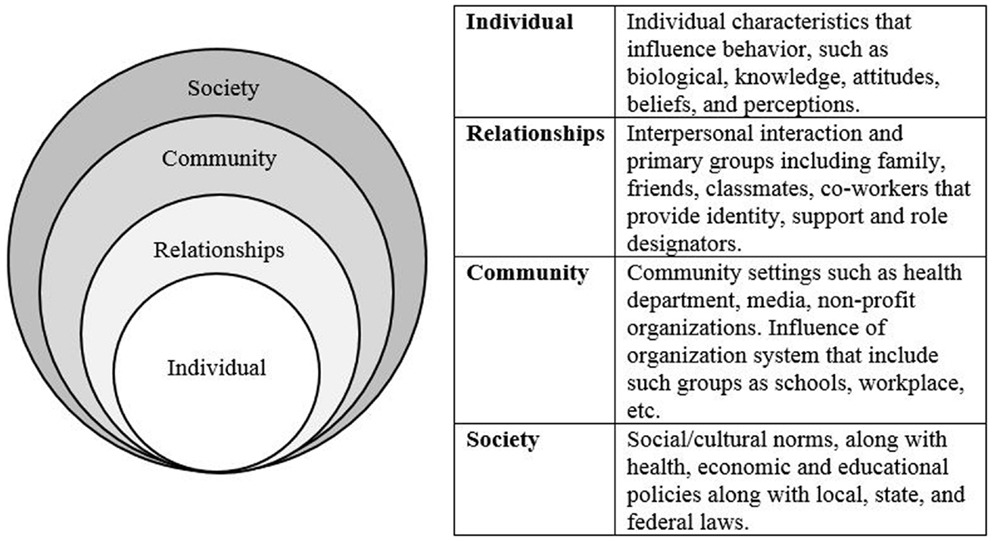
Version history
| Version | Date of change | Information |
|---|---|---|
| 1.0 | January 2024 | Released for familiarisation and planning (with implementation starting in 2025) |
| 1.1 | July 2024 | Released for implementation with minor updates |
| 1.2 | October 2024 | ISBN removed and minor updates |
| 1.3 | January 2026 | File metadata changes to support new Syllabuses application functionality |